British Columbia
British Columbia

CHOOSE THE METAL BEFORE THE SHOP CUTS IT
Not sure which metal, thickness, or finish to put on the order?
The metal, its thickness, and its finish decide how a part looks on day one and how it holds up after. These guides help you pick each one before anything is cut, in words you can put straight on the order.
Decide it on paper, not on site.

Start Here With Stainless Steel Finishes Explained →
Mill, brushed, and mirror surfaces look different and wear differently. The guide shows where each surface holds up, what welds, folds, and sea air do to it, and how to write it on the order, with a checklist to send.
Each guide settles one choice that changes what the shop cuts, from the grade of stainless to the thickness of the sheet.

Grade 316 stands up to salt and strong cleaners better than 304, and it costs more. Learn which jobs call for 316, and where 304 does the job.

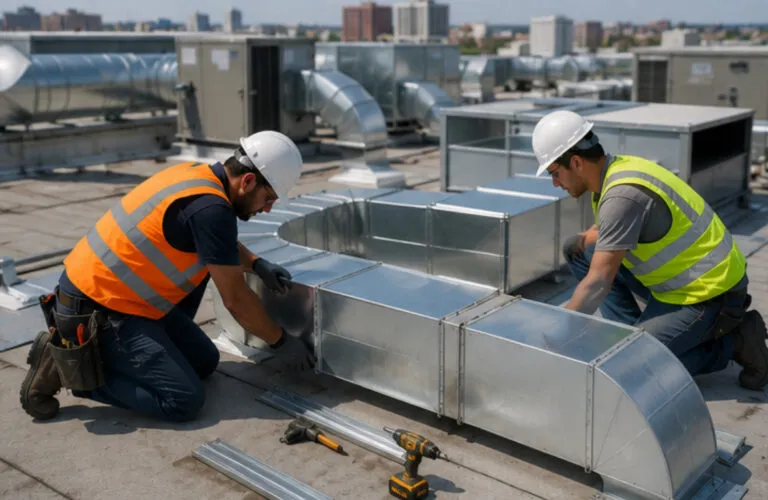
Galvanized steel is the everyday choice for dry ductwork. See when moisture, grease, or wash-down cleaning means a run or a part needs stainless instead.

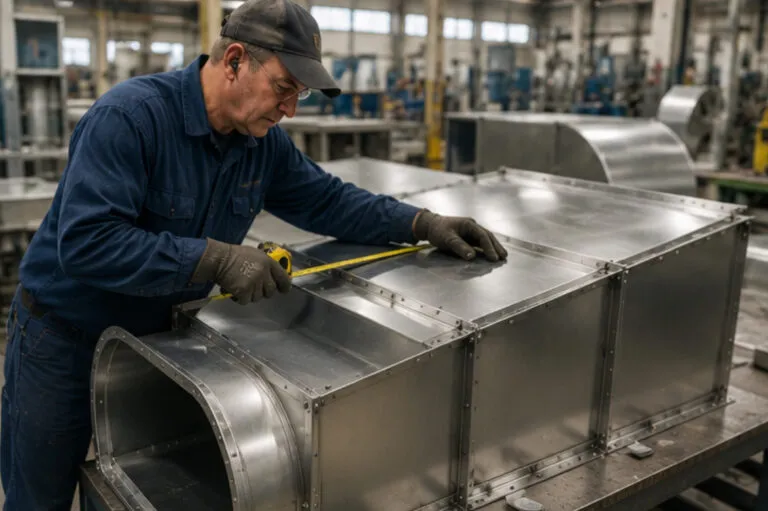
The same gauge number means a different thickness in steel, stainless, and aluminum. Learn what to write so the sheet you get is the one you meant.

Adding a piece next to a counter or panel that's already on site? Learn why the shop asks for a sample, and why a perfect match isn't always possible.

Already know the metal and finish you want? Send the drawing or your sketch, and we'll check it before anything is cut. Standard ductwork and fittings price instantly on WebDuct, the online pricing and ordering portal, once your company has an account.
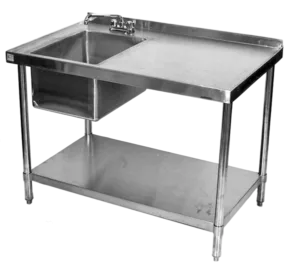
Working out a budget? Custom Fabrication Cost Guides explains what drives the price, and Kitchen Exhaust and Food-Service Fabrication covers restaurant counters, sinks, and hoods. Every other choice to make before an order is covered in the Spec Room.