Skip to content

A catalog fitting works well when the duct dimensions, connection shapes, and route all match standard sizes. Custom duct fittings earn their place when the duct run meets a beam, the equipment outlet sits off the planned route, or the field dimensions differ from the drawing. At that point, someone on your crew is cutting and reshaping a standard part on a ladder.
For HVAC and mechanical contractors across Greater Vancouver, the call is straightforward: use a catalog fitting when it genuinely fits, and fabricate a custom one when the geometry or the site says otherwise. Making that call before material leaves our Pitt Meadows shop is what keeps the modification off your install day.
Custom fabrication does not mean every fitting gets made from scratch. It means building the components standard parts cannot cover: unusual transitions, offsets, reducers, equipment connections, and site-specific fittings.
When Does a Duct Run Actually Need a Custom Fitting?
Three conditions push a duct connection beyond standard catalog parts.
- The shape changes. A rectangular trunk meeting a round branch has no single catalog part that satisfies both ends.
- The dimensions do not match. Field measurements rarely land on catalog sizes, and that gap is where the trimming starts.
- The route has to change. A beam, a sprinkler main, or another trade’s run forces an offset the drawing never showed.
A round-to-round connection at a conventional angle is straightforward. A rectangular trunk connecting to a round branch, or an equipment outlet sitting off-centre, is where fabrication starts to pay.
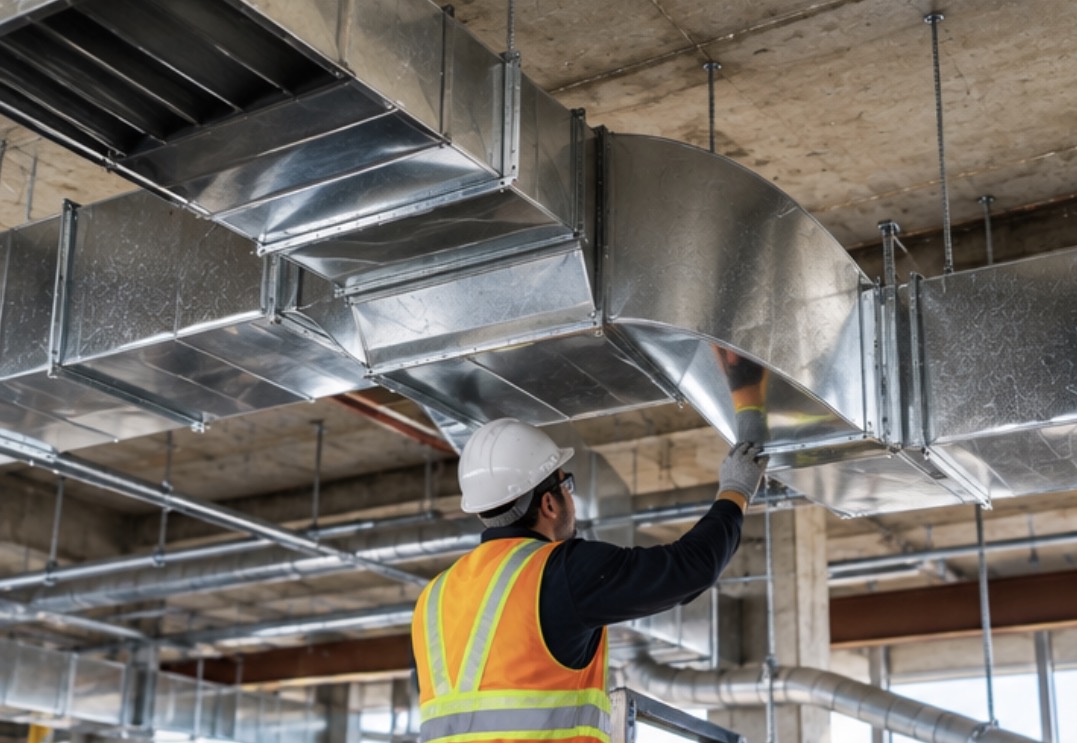
Retrofit and renovation work makes this more common. Existing beams, framing, piping, and electrical all narrow the available duct path, and a fitting that works perfectly on the drawing can fail the moment your crew opens the ceiling.
Before ordering a custom fitting, check whether a standard component still makes the connection without heavy modification. If it does not, price the fabrication now rather than at the installation stage.
Catalog Fitting vs. Custom Duct Fitting: What Is the Difference?
The choice is not between a cheap fitting and an expensive one. It is whether the component matches the installation without significant modification in the field.
| Consideration | Catalog Fitting | Custom Duct Fitting |
|---|---|---|
| Standard dimensions | Usually appropriate | Not worth fabricating |
| Common 45° or 90° turns | Good fit | Usually unnecessary |
| Non-standard dimensions | Limited | Designed to specified dimensions |
| Equipment connections | Depends on outlet size | Can be built to actual connection |
| Site-specific offsets | Limited | Can be fabricated to required route |
| Unusual transitions | Limited options | Custom geometry available |
| Retrofit conditions | May require modification | Can account for field conditions |
| Small quantity | Often readily available | Requires fabrication lead time |
| Field changes | May require on-site adjustment | Can be revised before installation |
The practical goal is to avoid paying for custom fabrication where a standard fitting already works. Forcing a standard component into a connection it was never designed for creates more labour and coordination problems later.
What Does Field-Modifying a Catalog Fitting Cost on Install Day?
The purchase price of a catalog fitting is not its installed cost once your crew has to modify it. Cutting, reshaping, sealing, reinforcing, and rechecking a component all consume labour that was never in the material estimate.
Field modification also produces a less predictable result. A fitting formed for a particular transition has controlled geometry. A part reworked on site is only as good as the light and the angle the fitter had, and it needs more attention at the seams, the connections, and the airflow. Bending accuracy shows up directly in commercial HVAC installation time, and a part reworked on a ladder rarely holds the tolerance of one formed in the shop.
So the real cost is more than the few dollars saved on the off-the-shelf part. It is labour, installation time, extra sealing material, coordination, and sometimes fabricating the replacement anyway.
When a standard fitting needs substantial modification, price the custom part first. That is the only number that reflects what the connection actually costs you.
Which Duct Fittings Most Often Need to Be Fabricated?
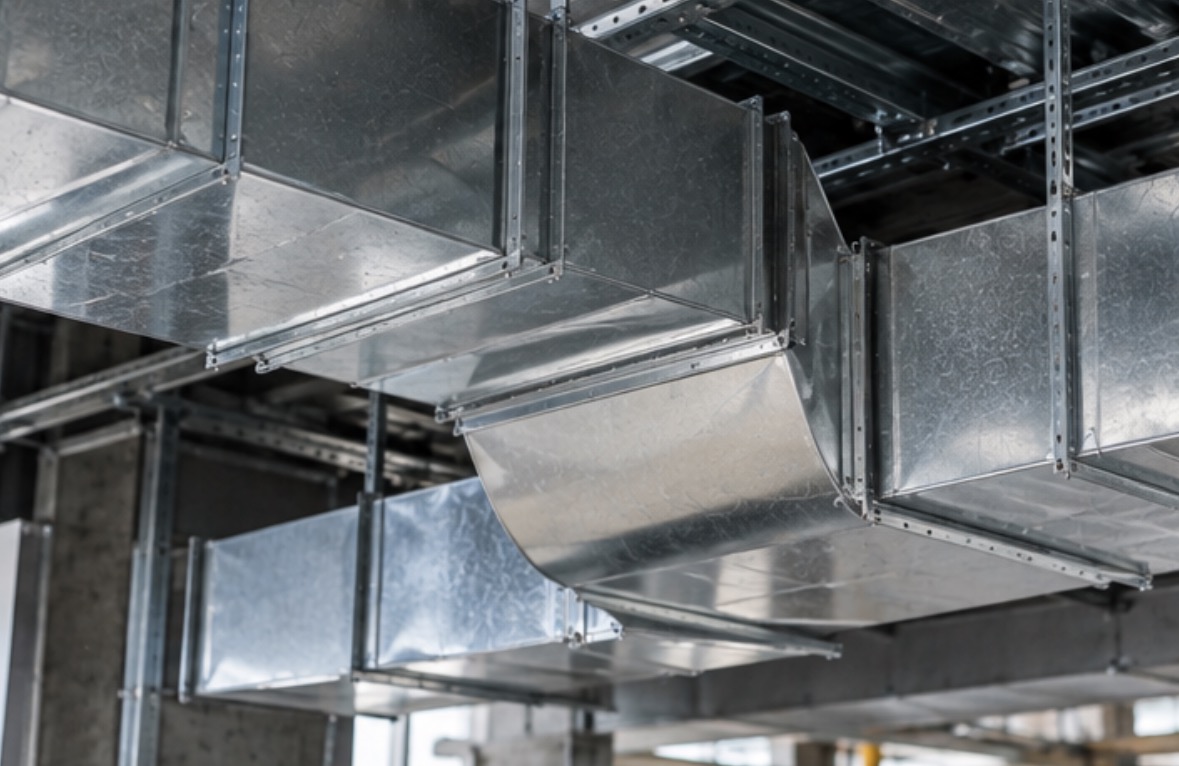
Some fittings are commonly available in standard configurations, while others depend heavily on the dimensions and conditions of the specific installation. The more variables a fitting has to reconcile, the more likely custom fabrication becomes useful.
Common examples include:
- Rectangle-to-Round Transitions: Connect rectangular trunk duct to round branches, equipment outlets, or exposed runs.
- Square-to-Round Transitions: Connect equipment or duct sections with different connection shapes.
- Reducers: Change duct dimensions where the required size combination is not available as a standard fitting.
- Custom Elbows: Route duct around beams, columns, equipment, or other obstructions when standard angles do not work.
- Offsets: Shift a duct laterally or vertically to clear structural or mechanical obstacles.
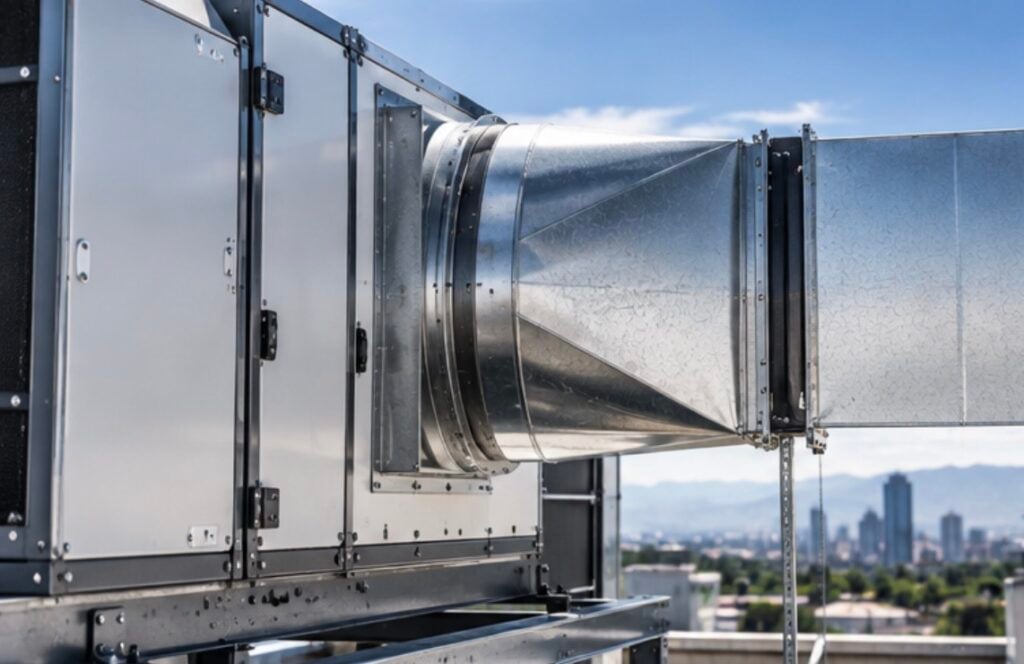
- Equipment Connections: Adapt ductwork to equipment outlets, collars, curbs, or other connection dimensions. Kitchen exhaust adds its own requirements, which is where grease ductwork fabrication runs to a stricter standard.
- Custom Plenums: Provide a fabricated connection between equipment and ductwork where standard components do not match, often alongside filter boxes and air control components built into the same assembly.
These fittings are not automatically custom on every project. If the required dimensions and geometry match an available standard component, a catalog fitting may remain the most efficient choice.
Why Do Transitions Often Require Custom Fabrication?
Transitions have to connect two different duct configurations inside the space you actually have. Shape, width, height, diameter, and connection location can all change at once, which is why they are the fitting most likely to come back as custom. Three reasons account for most of it.
1. The Two Connections Are Different Shapes
A rectangular trunk meeting a round branch, or a square equipment outlet meeting round duct, has no single catalog part that satisfies both ends. The geometry has to be developed for that specific pair of connections.
2. There Is Not Enough Length to Make the Change
Catalog transitions assume a standard run length. When the ceiling gives you less, the angle steepens, and that changes the pattern, the seams, and the airflow behaviour. Precision sheet metal cutting and bending is what holds the geometry when the length is tight.
3. The Equipment Outlet Sits Off the Duct Centreline
An outlet that does not line up with the trunk forces an eccentric transition. Building that offset into the part keeps it out of your install, and welded seams and assembly hold the shape better than a field-crimped joint.
A custom transition is only as accurate as the dimensions you send. Give our ductwork fabrication specialists the actual connection requirements, not the drawing’s intent.
What Information Does a Shop Need to Build a Fitting That Fits?
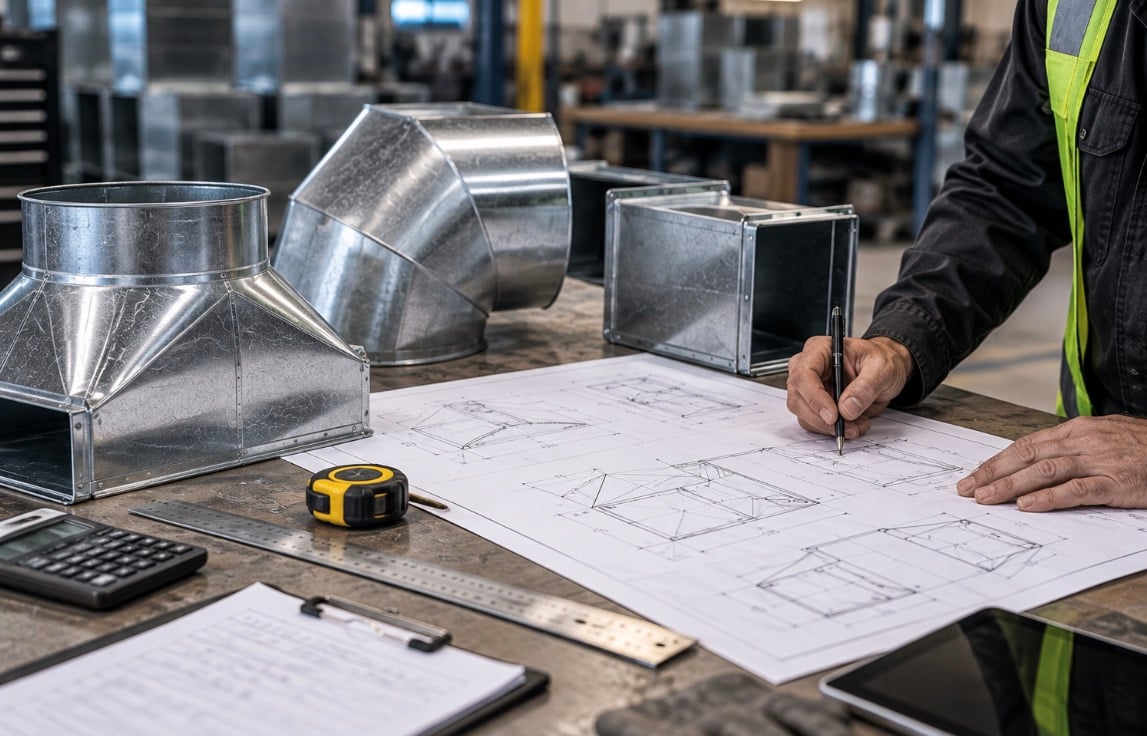
A fabricated fitting is only useful if it arrives ready to install, and that comes down to what the shop is handed. Dimensions and specifications sent before fabrication are worth more than any amount of correction afterwards.
Orders for custom ductwork fabrication should provide as much of the following information as possible:
- Connection dimensions: Width, height, diameter, or other relevant measurements.
- Connection shapes: Identify whether each end is round, rectangular, square, or another configuration.
- Overall length: Specify how much space is available for the fitting.
- Offset requirements: Include horizontal or vertical displacement where applicable.
- Angles: Provide the required direction and angle rather than simply requesting an elbow.
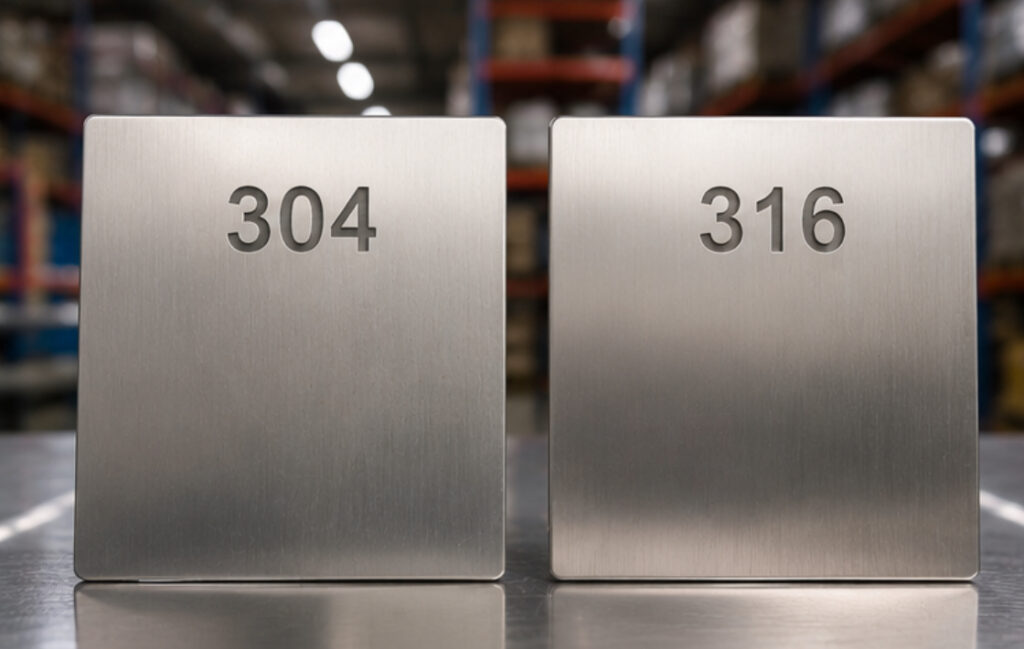
- Material and gauge: Specify the sheet metal and the thickness. Stainless steel ductwork holds up under wash-down and corrosive exposure where galvanized will not, so the stainless or galvanized decision is worth settling before fabrication.
- Equipment connection dimensions: Include collars, outlets, curbs, or other equipment measurements.
- Installation conditions: Note clearance restrictions, exposure conditions and other site factors, which drive the material and finish selection.
A field sketch or a measurement sheet does more than a description when the fitting has to account for existing conditions. The clearer the information, the less back-and-forth before we cut.
Have the dimensions in hand? Send them to our Pitt Meadows shop, and we will come back with the fitting and the price. Call 604-924-6744, or place the order through our online portal.
What Happens If the Field Dimensions Change After Fabrication?
Construction projects do not always follow the original drawings exactly. A beam may be different from the plan, another trade may occupy the intended route, or equipment dimensions may change before installation.
So verify the critical dimensions before fabrication starts. If a fitting is already in production when conditions change, you are modifying the part, reordering it, or adjusting the ductwork around it.
Field verification matters most on retrofit work, where existing buildings hide conditions nobody could see at the design stage.
If a dimension is uncertain, say so before fabrication rather than assuming a standard fitting will absorb the difference. A five-minute measurement check beats finding the problem when the component is already on site.
Should Custom Fittings Be Ordered as Part of a Larger Ductwork Package?
Custom fittings are frequently part of a larger ductwork package that can include rectangular duct, round duct, plenums, reducers, elbows, offsets, equipment connections, and transitions.
Producing related components through one fabrication source simplifies coordination and keeps material specifications, connection details, and gauge consistent across the package. It also means one set of shop drawings to check instead of three.
| Project Component | Why Package Fabrication Can Help |
|---|---|
| Rectangular duct | Consistent material and connection details |
| Custom transitions | Can be coordinated with adjoining duct dimensions |
| Plenums | Equipment connection can be considered with the duct package |
| Reducers | Dimensions can match the surrounding ductwork |
| Elbows and offsets | Can be coordinated with the actual route |
| Equipment connections | Easier to coordinate connection dimensions |
| Specialty fittings | Can be fabricated alongside related components |
Sourcing one fitting elsewhere still makes sense sometimes. But check a shop’s sheet metal fabrication capabilities before you split a package, especially when it includes specialty work like sound-insulated ductwork that not every shop runs.
When Is a Catalog Fitting Still the Better Choice?
Custom fabrication should not be treated as the default. Standard fittings remain useful when the connection matches an available size and configuration and can be installed without significant modification.
A catalog fitting may be appropriate when:
- Dimensions match a standard component.
- The route does not require an unusual offset.
- The connection shape is conventional.
- The equipment outlet matches an available fitting.
- The fitting can be installed without extensive field modification.
- The project schedule benefits from readily available components.
Using standard components where they genuinely fit can keep material costs and procurement time under control. The purpose of custom fabrication is to address the connections where standard parts no longer provide a practical solution.
Frequently Asked Questions
When does an HVAC contractor need a custom duct fitting?
A custom fitting is usually worth considering when the required dimensions, connection shapes, angles, offsets, or equipment connections do not match available standard components. Retrofit projects and installations with tight space restrictions can also create conditions where custom fabrication is more practical than modifying a catalog fitting.
Are custom duct fittings more expensive than catalog fittings?
The fabrication price may be higher than a standard fitting, but material price is only part of the comparison. If a catalog fitting requires significant field modification, the additional labour and installation time can reduce or eliminate the initial savings.
What measurements are needed for a custom duct fitting?
The fabricator generally needs the connection dimensions and shapes, overall length, offset or angle requirements, material and gauge, equipment connection dimensions, and relevant site restrictions. Accurate field measurements are especially important for retrofit and renovation projects.
Can a custom duct fitting be made for existing HVAC equipment?
Yes. Custom fittings can be fabricated to connect ductwork to equipment outlets, collars, curbs, and other connection points when standard fittings do not match the required dimensions. The equipment connection should be measured carefully before fabrication.
Should custom duct fittings be ordered with the rest of the ductwork?
Usually yes. Coordinating custom fittings with the broader ductwork package keeps dimensions, material specifications, connection details and delivery consistent. The exception is a one-off fitting on a schedule that will not wait for the rest of the package.
Why Choose Duct Duct Goose for Custom Duct Fittings in Greater Vancouver?
The right duct fitting fits the installation you actually have, instead of asking your crew to make an approximate part work. Duct Duct Goose fabricates custom duct fittings for HVAC and mechanical contractors from our Pitt Meadows shop, across Greater Vancouver.
We build transitions, reducers, elbows, offsets, equipment connections and other site-specific components to your drawings and dimensions, in line with applicable SMACNA standards and your approved project specifications. Larger packages run through the same shop, so connection details and gauge stay consistent end to end.
If a catalog fitting does not match the dimensions or the route on your current project, send the requirements before your crew reaches installation. Call 604-924-6744 to talk through the specs and request a quote.