Skip to content

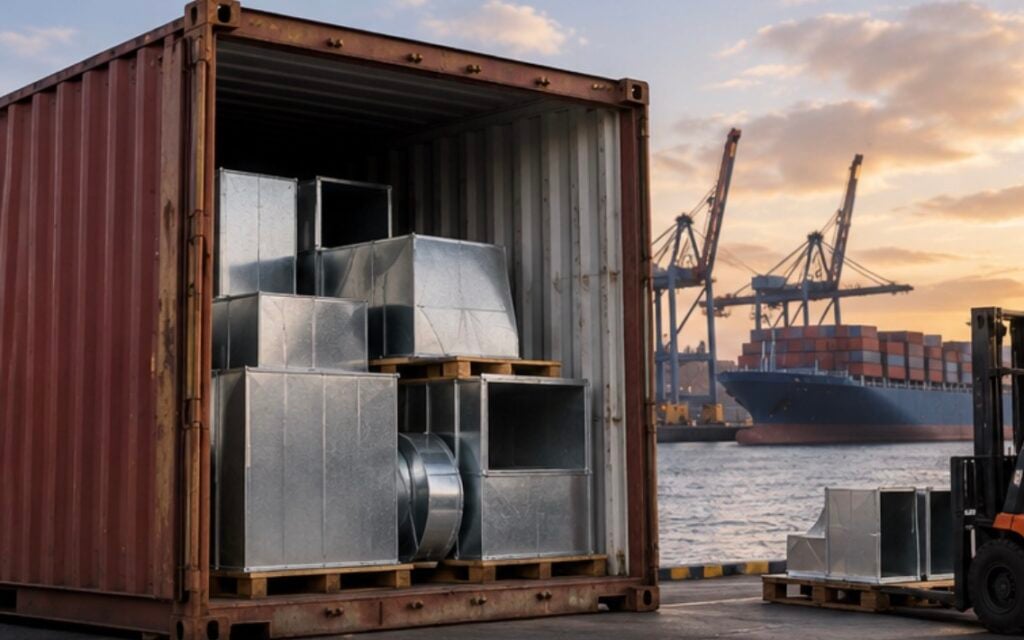
Imported and prefabricated ductwork can come with a lower unit price than local fabrication, and when margins are tight, that gap is worth checking. The challenge is that a unit price describes the material itself, not the total cost of getting it delivered, fitted, and installed on a real jobsite.
If you fabricate or install for HVAC and mechanical projects across Greater Vancouver, the more useful comparison is landed and installed cost. Imported ductwork genuinely makes sense on some projects, especially when the package is standardized and the schedule has room. On custom or schedule-sensitive work, freight, overage, field modifications, and correction time change the economics.
Neither option wins every job. What matters is which one fits this project, what it costs once everything is counted, and what it does to your schedule if something arrives wrong. The same trade-off runs through any custom, prefab, or imported sourcing decision, and ductwork is where it bites hardest.
When Does Imported Ductwork Actually Cost Less?
There is a real case for imported ductwork, and dismissing it outright costs you a useful option. Offshore and prefabricated suppliers compete well on straight duct runs and standard catalogue fittings produced in large quantities. When the package is highly repetitive, the lower material price often survives transportation and handling.
Importing tends to make more sense when several conditions apply at the same time:
- Standard dimensions: Most components follow established catalogue sizes.
- High quantities: The project is large enough to justify minimum-order requirements.
- Stable drawings: Fabrication dimensions are unlikely to change after ordering.
- Flexible schedule: The installation can absorb a longer procurement window.
- Storage capacity: The contractor has suitable space for the delivered package.
- Predictable site conditions: There is little risk that field measurements will differ significantly from the drawings.
Imported ductwork works best when the project itself is predictable. Once drawings start changing, dimensions turn site-specific, or the installation window tightens, that lower material price has to be weighed against the risk it adds.
We will say this plainly: if your package is two hundred identical straight runs at catalogue dimensions and you have eight weeks, import it. You would get the same answer from us on the phone.
The Costs the Imported Unit Price Leaves Out
The quoted price per fitting or duct section is not what you ultimately spend. Imported material carries transportation and procurement costs before it reaches the jobsite, and installation conditions add labour after delivery.
Some of the costs worth checking include:
| Cost Category | What to Consider |
|---|---|
| Freight | Transportation from the supplier to the project |
| Duty and brokerage | Import-related charges where applicable |
| Insurance and handling | Additional costs associated with shipment |
| Minimum-order overage | Material purchased beyond the actual project requirement |
| Storage | Space and handling required for surplus material |
| Field-fit labour | Time spent modifying components on site |
| Replacement freight | Additional shipping if a part arrives damaged or incorrect |
| Schedule impact | Labour and coordination costs caused by delayed components |
These costs vary by supplier, project size, shipping method, and location, so confirm them rather than estimating from a generic percentage.
When you are comparing a ductwork package quote, the number that matters is the delivered cost at the jobsite, followed by what it costs to make the material installation-ready.
The Field Is Not the Place to Finish the Fabrication
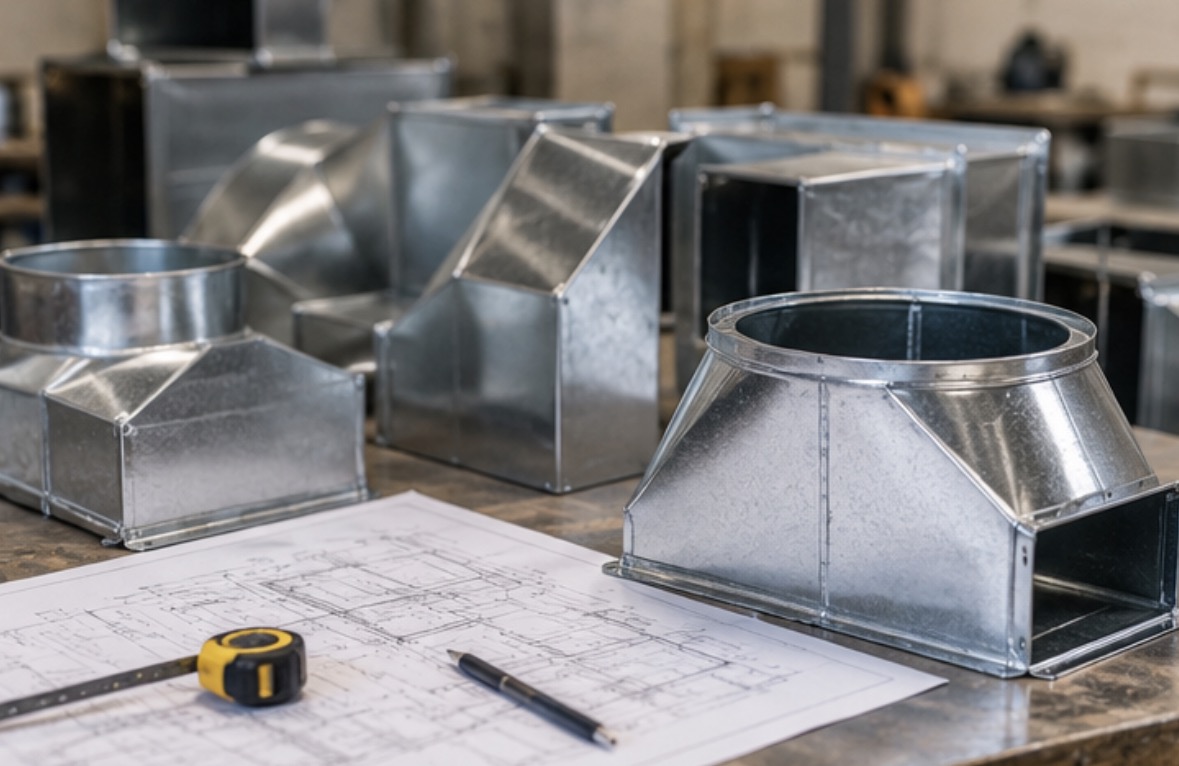
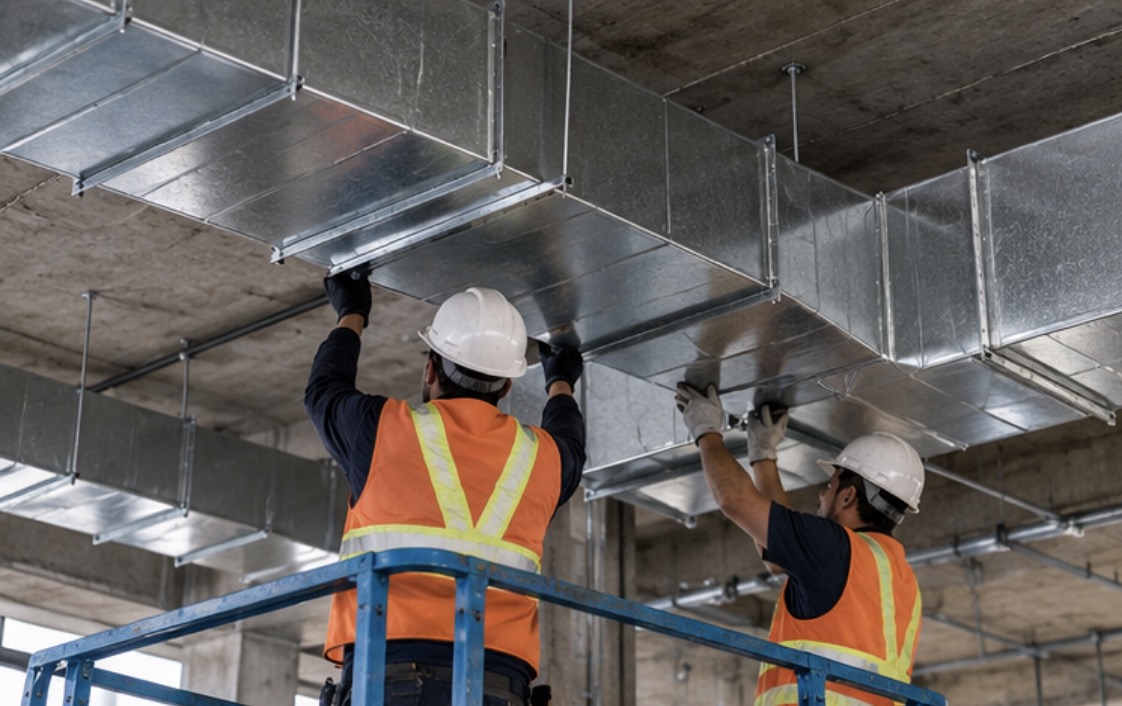
Field modification is the cost most often missed at the quoting stage. When a duct section, transition, or fitting does not match the site condition, your crew stops and adapts the component before work continues.
The impact can include:
- Additional crew hours
- Cutting and modification on site
- Re-measuring and fabrication
- Waiting for replacement components
- Rescheduling other trades
- Additional site visits
- Lost installation productivity
The schedule hit is usually bigger than the material problem. Ductwork has to coordinate with ceilings, electrical, plumbing, insulation, controls, and fire protection, so one delayed component pushes work well beyond the sheet metal scope.
Accurate sheet metal cutting and bending cuts down the field modification needed when components have to match specific project dimensions, and clean welding and assembly keep the fit right before the piece ever leaves the shop.
A local fabrication relationship earns its keep when you need a correction fast. The value is not that the part is made nearby. It is being able to phone about the problem and fix it without restarting an international procurement cycle.
What Happens When an Imported Part Arrives Wrong?
Lead time matters most when something has to be corrected. A component that arrives with the wrong dimensions, configuration, or specification often has to be replaced rather than adjusted, depending on the part and the error.
For imported material, that replacement means another production cycle, transportation, customs clearance, and delivery. If you have several weeks of float, you absorb it. If you are waiting on one transition before the ceiling closes in, you cannot.
Manufacturing origin and compliance are two different questions. Imported ductwork is not unsuitable for inspection. Correctly specified, properly manufactured components pass when they meet the project’s requirements.
The risk is the time a correction takes. With locally produced custom duct fittings, you have a shorter path to flagging the issue and getting a revised component made.
When Does Local Duct Fabrication Win the Job?
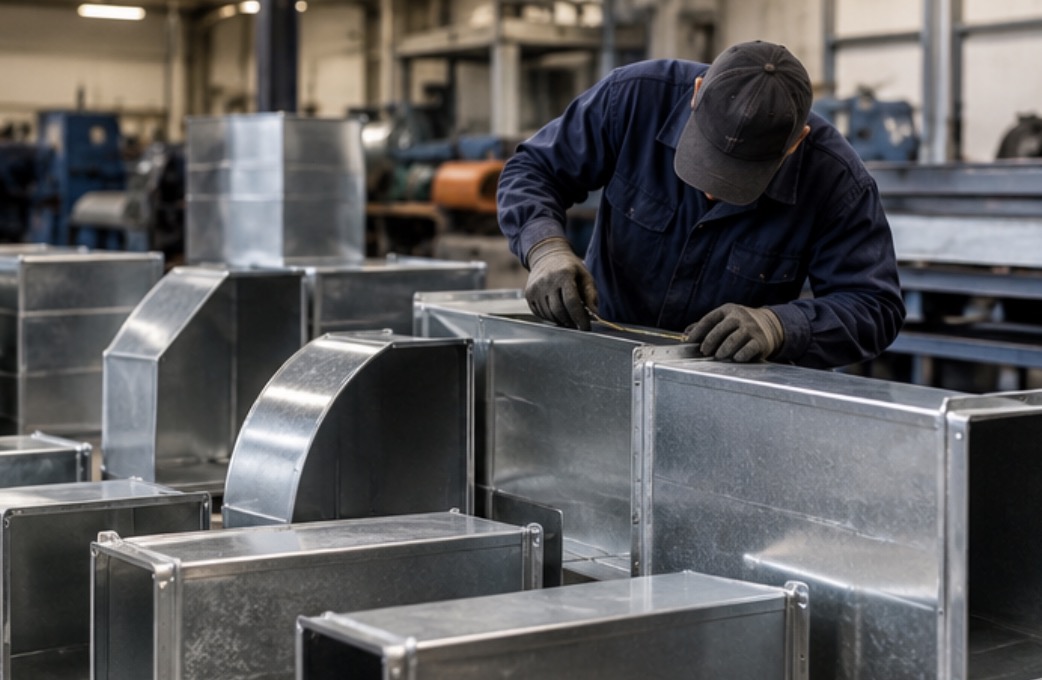
Local fabrication gets more competitive the moment the project stops looking like a standard catalogue order. Retrofit work, commercial renovations, awkward mechanical rooms, and jobs with changing field conditions need components built around the actual installation.
Local custom ductwork fabrication is worth pricing when the project includes:
- Custom dimensions: Site-specific transitions, offsets, or plenums.
- Changing drawings: Design revisions occurring during procurement or installation.
- Short lead times: Components needed within days rather than a long procurement window.
- Inspection-sensitive work: Projects where correcting a non-conforming component could delay the schedule.
- Small-batch fabrication: Quantities that do not justify large minimum orders.
- Difficult site conditions: Existing buildings where field dimensions may differ from drawings.
Local fabrication does not automatically win on material price. The advantage is that the fabrication stays tied to what the project actually needs.
That matters the moment a delay or a field modification costs you more than the material saved.
Request a Fabrication Estimate on the custom portion and compare it against the imported quote line for line.
Custom Ductwork Changes What You Are Actually Comparing
Custom ductwork changes the calculation because the metal has to solve a specific installation problem. A straight duct section at standard dimensions is easy to compare between suppliers. A transition joining two different dimensions inside a tight mechanical room is a different job, and the material and finish you specify moves the price as much as the geometry does.
Before you choose a supplier for custom work, work through these:
| Question | Why It Matters |
|---|---|
| Can the fabricator work from current site dimensions? | Reduces the risk of producing components from outdated information |
| Can custom transitions and plenums be fabricated? | Important for non-standard installations |
| How quickly can revised pieces be produced? | Helps limit schedule exposure |
| How are drawing changes handled? | Determines flexibility during construction |
| How are incorrect components corrected? | Shows what happens when something does not fit |
| Can the fabricator meet the required installation date? | Connects fabrication directly to the project schedule |
These separate a low material price from fabrication that actually works on the job.
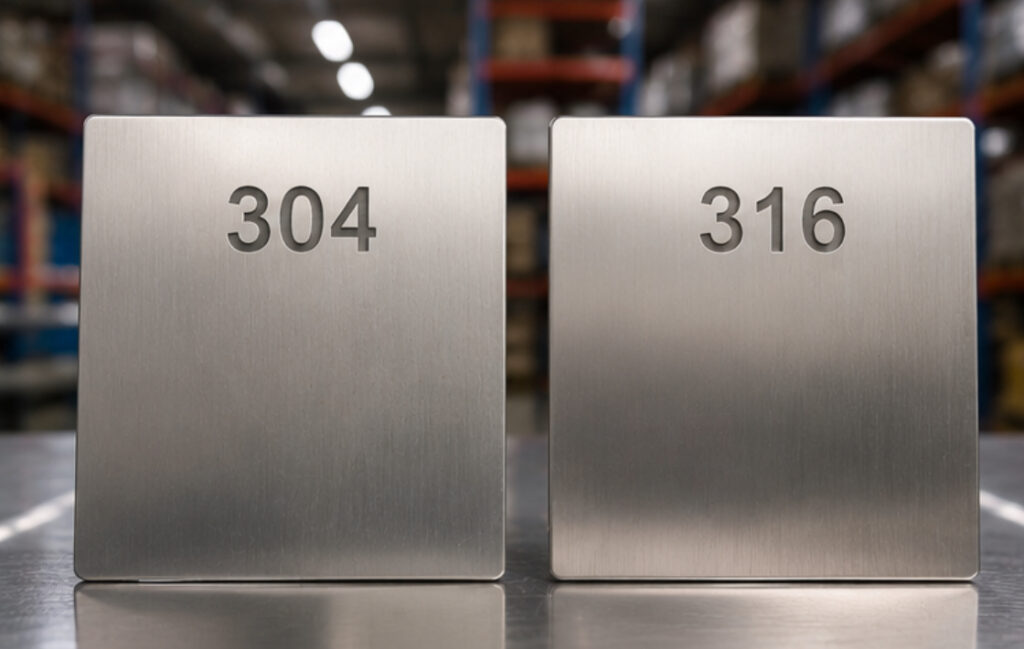
Stainless adds another layer, since stainless steel ductwork fabrication carries different forming, welding, and handling requirements than galvanized.
How Should Contractors Compare Imported and Local Ductwork Quotes?
A fair comparison starts by putting both options on the same scope. Make the imported quote include everything needed to get the material to the jobsite, and hold the local quote to the same quantities, specifications, delivery requirements, and fabrication scope.
Use a comparison like this:
| Cost or Risk | Imported Ductwork | Local Fabrication |
|---|---|---|
| Unit material price | Usually lower on standardized packages | Usually higher per unit |
| Freight | Quoted separately, and rarely small | Usually shorter-distance delivery |
| Import charges | Duty and brokerage apply on imported goods | Generally not applicable |
| Minimum order | Minimum orders force surplus | Can often be ordered closer to actual need |
| Storage | Bulk shipments need yard or warehouse space | Less material sitting on site |
| Custom modifications | Hard to change once produced | Can be coordinated directly |
| Field-fit labour | Rises when site conditions differ from drawings | Components can be fabricated to requirements |
| Replacement lead time | Another production and shipping cycle | Corrections turn around locally |
| Schedule flexibility | Set by the procurement window | Can be more responsive for urgent pieces |
| Communication | Runs through a broker, an agent, or both | Direct contractor-fabricator communication |
Factor in the schedule too. Several weeks of float buys a lot of tolerance for procurement risk. Needing a replacement fitting in two days to keep three trades moving buys none.
So the right answer changes from job to job. You are not shopping for the cheapest ductwork on paper. You are shopping for the package that shows up correct, complete, and on the day you need it.
Split the Package: Standard Runs Imported, Custom Pieces Local
Large projects do not have to be an either-or decision. Standard, high-volume duct runs can be economical through an imported or prefabricated package while the custom components are handled locally through sheet metal fabrication capabilities close to the job.
This approach can make sense when a project contains:
- Large quantities of standard duct sections
- Custom transitions
- Equipment connections
- Site-specific plenums
- Unusual offsets
- Retrofit components
- Small quantities of specialty fittings
Judge the standard portions on material and delivered cost. Judge the custom portions on fit, turnaround, and schedule.
Splitting the package often balances material savings against jobsite flexibility better than forcing every component through the same procurement model. Everything still has to flock together at delivery, so keep one set of drawings as the reference for both sources.
What Questions Should You Ask Before Choosing a Ductwork Supplier?
Before you approve a ductwork package, make the quote answer more than what the material costs. The procurement details decide whether that price still holds once you reach installation.
Ask the supplier:
- Is freight included?
- Are brokerage and applicable import charges included?
- What are the minimum order quantities?
- How much surplus material should be expected?
- What is the confirmed production lead time?
- What is the expected delivery date?
- How are drawing revisions handled?
- Can custom transitions and plenums be produced?
- What happens if a component arrives damaged or incorrect?
- How quickly can replacement components be fabricated?
- What delivery support is available if the installation schedule changes?
Ask a local fabricator the same questions about turnaround, delivery, revisions, custom fabrication, and corrections. Ask so you know what you are buying, and what happens when the job does not go to plan. What we need to quote custom metalwork covers the information side of that from our end.
Frequently Asked Questions
Is imported ductwork always cheaper than local fabrication?
No. Imported ductwork often has a lower unit price on large quantities of standardized components. Freight, import charges, storage, field modifications, and correction costs then change the final project cost. The fairest comparison is total delivered-and-installed cost.
When does local duct fabrication make more sense?
Local fabrication is worth comparing when a project needs custom dimensions, transitions, plenums, short lead times, drawing changes, or small-batch components. It can also be valuable when the cost of waiting for a replacement part would affect other trades or the project schedule.
What should be included when comparing imported ductwork quotes?
Compare more than the material price. Include freight, applicable duties and brokerage, storage, minimum-order overage, delivery requirements, expected field-fit labour, and the potential cost of correcting or replacing components. Both quotes should cover the same scope before you compare the final numbers.
Can imported ductwork be used on commercial projects?
Yes, provided the components meet the project’s specifications, applicable requirements, and inspection criteria. What matters is not where the ductwork was manufactured, but whether the material is correctly specified, fabricated, delivered, and installed for the project.
Can a contractor combine imported and locally fabricated ductwork?
Yes. A contractor may use imported or prefabricated components for standardized, high-volume sections while using local fabrication for custom transitions, plenums, equipment connections, or other site-specific pieces. The best approach depends on the project’s scope, schedule, quantities, and fabrication requirements.
Why Choose Duct Duct Goose for Custom Duct Fabrication in Greater Vancouver?
Comparing ductwork suppliers starts with total project cost, not the lowest unit price. Duct Duct Goose fabricates custom ductwork, fittings, transitions, and specialty sheet metal components for HVAC and mechanical contractors across Greater Vancouver, from our shop in Pitt Meadows.
We build for contractors who need components made to project requirements rather than pulled from a standard catalogue. Send the drawings and dimensions through the WebDuct ordering portal or straight to the shop, and the specs get reviewed before anything goes on the brake.
If you are comparing an imported ductwork package against local fabrication, send the project requirements over and compare the options on more than unit price. Call 604-924-6744 or get in touch with the shop to talk through the specs.