Skip to content

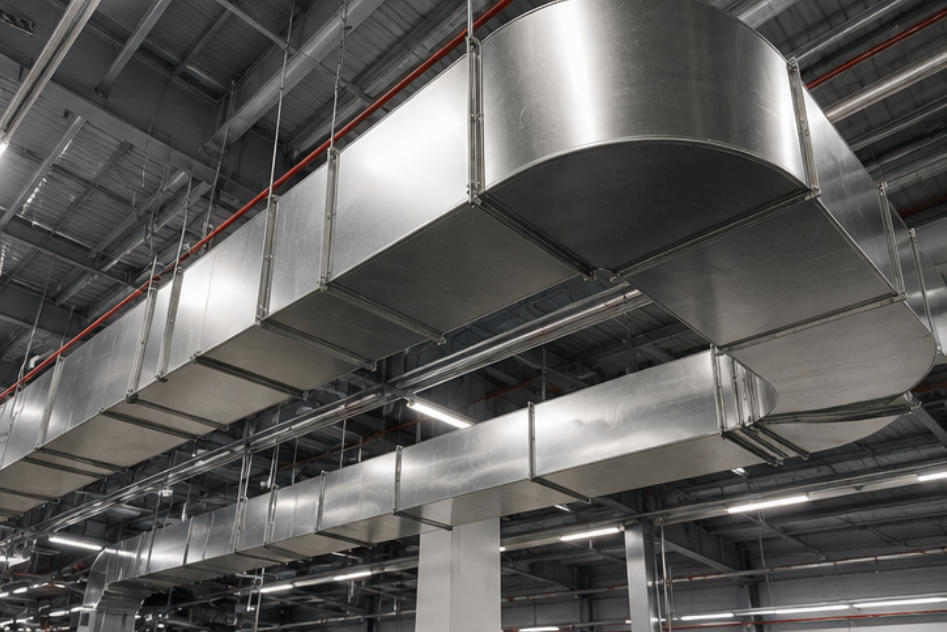
When facility managers evaluate HVAC and ventilation infrastructure, upfront cost often receives the most attention. However, industrial ductwork is rarely a short-term investment. Manufacturing plants, food processing facilities, pharmaceutical operations, chemical plants, and commercial production environments expect duct systems to operate reliably for decades while handling demanding conditions that standard materials may struggle to withstand.
That is why many industrial facilities are increasingly choosing stainless steel ductwork fabrication over traditional galvanized options. While stainless steel typically requires a higher initial investment, its durability, corrosion resistance, lower maintenance requirements, and longer service life often deliver substantially better long-term value.
Understanding where stainless steel excels helps facility owners make more informed decisions when planning new construction, facility expansions, or HVAC upgrades.
Why Does Material Selection Matter in Industrial Ductwork Fabrication?

Industrial ductwork does much more than move air. Depending on the facility, duct systems may transport heated air, exhaust fumes, grease-laden vapors, process contaminants, moisture, chemicals, or particulate matter. These conditions can place significant stress on sheet metal components year after year.
The material selected during HVAC ductwork fabrication directly impacts system lifespan, maintenance costs, energy efficiency, and operational reliability. While galvanized steel remains common in many commercial applications, more demanding industrial environments often require greater protection against corrosion, temperature fluctuations, and physical wear.
Common Environmental Challenges for Industrial Duct Systems
| Operating Condition | Impact on Ductwork |
|---|---|
| High humidity | Accelerates corrosion |
| Chemical exposure | Degrades protective coatings |
| High temperatures | Increases material stress |
| Washdown procedures | Introduces frequent moisture exposure |
| Grease and contaminants | Creates buildup and cleaning demands |
| Continuous operation | Accelerates long-term wear |
Because industrial duct systems frequently operate 24/7, even small improvements in durability can produce meaningful savings over the life of the facility.
What Makes Stainless Steel Different From Galvanized Steel?
At first glance, stainless steel and galvanized steel may appear similar. Both are widely used in sheet metal fabrication, and both provide structural strength for duct systems. The difference lies in how each material responds to harsh industrial environments over time.
Galvanized steel relies on a zinc coating to protect the underlying metal from corrosion. Once that protective layer becomes damaged or wears away, rust can begin developing. Stainless steel, by contrast, contains chromium that forms a protective oxide layer throughout the material itself. This means corrosion resistance is built into the metal rather than applied as a surface coating.
Stainless Steel vs. Galvanized Steel Comparison
| Factor | Stainless Steel | Galvanized Steel |
|---|---|---|
| Corrosion resistance | Excellent | Moderate |
| Moisture tolerance | Excellent | Limited over time |
| Service life | Often 30+ years | Often 15–25 years |
| Cleaning durability | Excellent | Can wear protective coating |
| Chemical resistance | Strong | More vulnerable |
| Initial cost | Higher | Lower |
While galvanized systems remain suitable for many applications, facilities exposed to moisture, chemicals, food production environments, or demanding cleaning protocols often realize greater value from stainless steel fabrication over the long term.
How Does Stainless Steel Reduce Long-Term Maintenance Costs?

The true value of stainless steel sheet metal fabrication becomes apparent long after installation. Industrial duct systems often operate continuously in environments exposed to moisture, chemicals, dust, heat, and airborne contaminants. Over time, these conditions can accelerate deterioration in standard duct materials, leading to recurring repairs and unplanned maintenance.
Stainless steel’s natural corrosion resistance helps maintain structural integrity even in demanding environments. That means fewer interruptions, more predictable maintenance schedules, and lower lifetime ownership costs. For facilities where ventilation systems support production, product quality, or environmental controls, preventing downtime often provides a greater financial benefit than the initial material savings of lower-cost alternatives.
Corrosion Resistance
Unlike galvanized materials that rely on protective coatings, stainless steel resists rust throughout the material itself, helping duct systems withstand moisture, humidity, and demanding industrial conditions for decades.
Stronger Seam Integrity
Corrosion can weaken joints and seams over time. Stainless steel helps maintain structural integrity, reducing air leakage, pressure loss, and performance issues throughout the ventilation system.
Chemical Exposure Protection
Many industrial facilities use cleaning agents, solvents, or process chemicals that can deteriorate conventional duct materials. Stainless steel offers superior resistance to these harsh operating environments.
Longer Service Life
Properly fabricated stainless steel ductwork often remains operational for 25 to 30 years or more, reducing the frequency of major system replacements and capital expenditures.
Reduced Downtime Risk
Fewer corrosion-related failures and repairs help facilities avoid production interruptions, emergency maintenance calls, and costly downtime that can impact daily operations.
Lower Lifecycle Costs
Although initial installation costs are higher, reduced maintenance, longer equipment life, and fewer replacement projects often result in lower total ownership costs over time.
For facilities operating multiple shifts, food-processing lines, manufacturing equipment, or environmental control systems, avoiding even a few major ductwork failures can generate substantial savings throughout the life of the ventilation system.
Which Industrial Facilities Benefit Most From Stainless Steel Ductwork?

Not every facility faces the same operating conditions, but certain industries consistently benefit from stainless steel because of the environments they operate in. Facilities exposed to moisture, corrosive chemicals, grease-laden exhaust, washdown procedures, or strict sanitation requirements often find that galvanized systems require significantly more maintenance over time.
Food processing plants, pharmaceutical facilities, breweries, wastewater treatment plants, commercial kitchens, and manufacturing operations frequently specify stainless steel because the material performs well under conditions that can quickly degrade conventional duct systems. In many of these environments, maintaining system integrity is not simply a maintenance concern. It is a compliance, safety, and production issue.
Industries That Commonly Specify Stainless Steel Duct Systems
| Industry | Common Reason for Stainless Steel |
|---|---|
| Food Processing | Sanitation and corrosion resistance |
| Pharmaceutical Manufacturing | Cleanability and contamination control |
| Commercial Kitchens | Grease exhaust durability |
| Chemical Processing | Resistance to corrosive environments |
| Breweries & Beverage Plants | Frequent washdowns and moisture exposure |
| Wastewater Facilities | Harsh air and corrosive compounds |
For facilities planning a new ventilation system or expansion, investing in professional ductwork fabrication designed specifically for the operating environment often prevents costly modifications later.
How Does Stainless Steel Support Better HVAC System Performance?
Durability is not the only reason facilities choose stainless steel. The condition of ductwork directly affects airflow performance, energy efficiency, and system reliability. Corrosion, air leakage, damaged seams, and deteriorating duct sections can force fans and HVAC equipment to work harder to move the same volume of air.
A properly fabricated stainless steel system helps maintain structural integrity over decades of operation. This is especially important in large industrial facilities where even small air losses can significantly impact energy consumption and system performance.
Performance Benefits of Quality Fabrication
- More consistent airflow throughout the system
- Reduced leakage at seams and joints
- Improved energy efficiency
- Better pressure management for industrial exhaust systems
- Longer service life for connected HVAC equipment
- Reduced downtime related to duct repairs
This is why many facility managers prioritize experienced HVAC ductwork fabrication partners who understand airflow design, pressure requirements, and long-term system performance rather than simply focusing on material costs alone.
Why Choose Duct Duct Goose for Stainless Steel Ductwork Fabrication?
The quality of a stainless steel duct system depends on more than the material itself. Proper fabrication, welding, fitment, and installation all play a major role in how the system performs over the next several decades. Even premium materials can underperform when fabrication standards are inconsistent.
At Duct Duct Goose, we specialize in custom stainless steel sheet metal fabrication and industrial ductwork fabrication solutions built around the specific needs of each project. Our team works with contractors, engineers, facility managers, and industrial operators to fabricate durable duct systems designed for demanding environments, complex airflow requirements, and long-term reliability.
Whether you’re planning a new ventilation system, upgrading aging infrastructure, or seeking custom HVAC ductwork fabrication for a specialized industrial application, we deliver precision-built solutions designed to support performance, efficiency, and longevity for years to come.