Skip to content

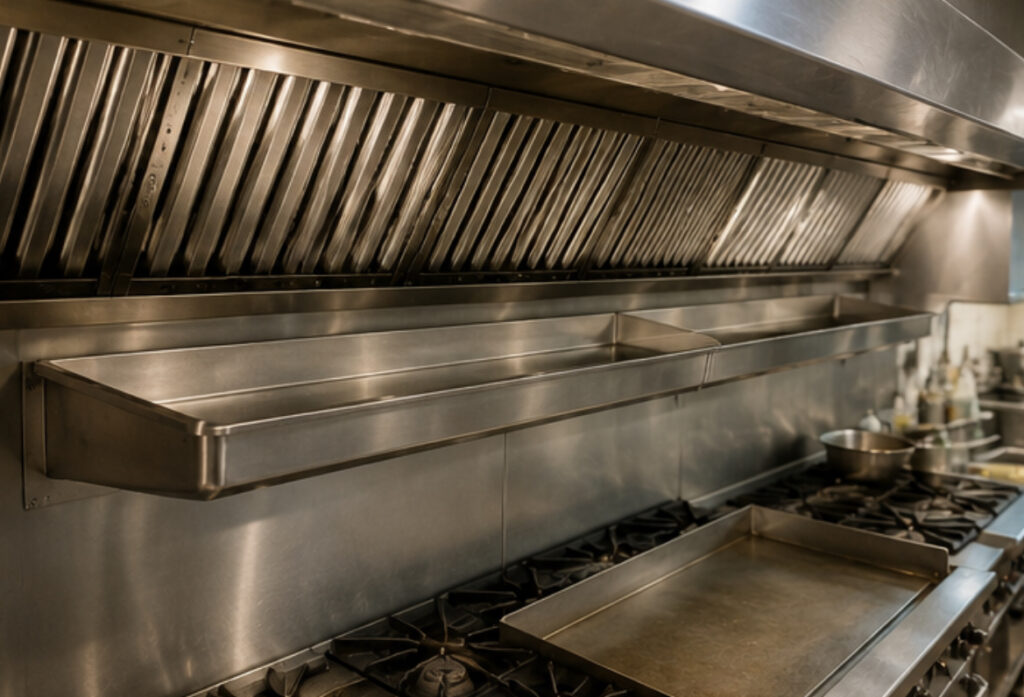
Drain pans are rarely the most visible part of a ventilation system, but they often play a critical role in protecting equipment, maintaining sanitation standards, and preventing costly operational issues. In commercial kitchens, food processing facilities, manufacturing plants, and industrial ventilation systems, moisture management is not optional. Condensation, grease-laden vapors, washdown procedures, and HVAC operation can all generate significant amounts of liquid that must be collected and drained safely.
This is where properly fabricated stainless steel drain pans become an essential component of the overall system. While they may seem simple, the material selection, fabrication quality, and design of the drain pan can directly impact hygiene, code compliance, equipment longevity, and maintenance requirements. For facilities where cleanliness and reliability matter, stainless steel often becomes the preferred solution.
Why Are Drain Pans Important in Commercial Kitchens and Industrial Ventilation?

Ventilation systems move large volumes of air, but they also manage moisture. Commercial kitchen exhaust systems, HVAC units, make-up air systems, refrigeration equipment, and industrial ventilation components frequently generate condensation that must be controlled before it damages equipment or creates sanitation concerns.
Without a properly designed drain pan, water can accumulate around equipment, leading to corrosion, mold growth, slippery work surfaces, and premature component failure. In food-service environments, standing water can also create conditions that attract pests and violate sanitation standards.
Common Sources of Moisture in Ventilation Systems
| Source | Potential Risk Without Drainage |
|---|---|
| HVAC evaporator coils | Water leaks and mold growth |
| Kitchen exhaust systems | Grease and moisture accumulation |
| Refrigeration equipment | Condensation damage |
| Washdown environments | Excess water exposure |
| Industrial process ventilation | Corrosion and contamination concerns |
| Make-up air units | Moisture collection during operation |
Because many facilities operate ventilation systems for 10 to 16 hours per day or more, even small drainage issues can become major maintenance problems over time.
Why Is Stainless Steel the Preferred Material for Drain Pans?
Material selection is one of the most important decisions in drain pan sheet metal fabrication. While galvanized steel, aluminum, and plastic pans are sometimes used in lighter-duty applications, stainless steel offers advantages that become increasingly important in demanding commercial and industrial environments.
Unlike coated materials that rely on a protective surface layer, stainless steel provides corrosion resistance throughout the material itself. This makes it particularly well suited for environments exposed to water, cleaning chemicals, grease, food particles, and fluctuating temperatures.
Stainless Steel vs. Alternative Drain Pan Materials
| Factor | Stainless Steel | Galvanized Steel | Plastic |
|---|---|---|---|
| Corrosion Resistance | Excellent | Moderate | Good |
| Heat Resistance | Excellent | Good | Limited |
| Chemical Resistance | Strong | Moderate | Varies |
| Service Life | 20–30+ Years | 10–20 Years | Often Shorter |
| Sanitation Performance | Excellent | Moderate | Good |
| Structural Durability | Excellent | Good | Lower |
For facilities investing in long-term performance, professional stainless steel fabrication often provides a significantly longer service life and lower maintenance burden than alternative materials.
How Do Stainless Steel Drain Pans Support Hygiene and Food Safety?

In commercial kitchens and food-processing facilities, cleanliness is not simply a preference. It is a regulatory requirement. Moisture collection systems must be easy to clean, resistant to contamination, and capable of withstanding frequent sanitation procedures.
Stainless steel’s smooth, non-porous surface makes it much easier to clean than many alternative materials. It resists staining, bacterial growth, and corrosion while tolerating many of the cleaning agents commonly used in commercial food-service environments. These characteristics are one reason stainless steel is widely used throughout food production and commercial kitchen operations.
Hygiene Advantages of Stainless Steel Drain Pans
- Smooth Surface: Non-porous stainless steel minimizes grease, dirt, and moisture buildup, making cleaning easier.
- Simplified Maintenance: Routine cleaning takes less time because contaminants do not adhere as easily to the surface.
- Rust Resistance: Unlike corroded materials, stainless steel resists rust that can harbor bacteria and contaminants.
- Washdown Durability: Performs reliably under frequent cleaning and sanitation procedures common in commercial facilities.
- Food-Safety Support: Helps facilities maintain sanitary conditions that support food-safety and inspection requirements.
- Cleaner Equipment Areas: Proper drainage and easy-to-clean surfaces contribute to a more hygienic ventilation system overall.
For facilities subject to health inspections, sanitation audits, or food-safety standards, properly fabricated drain pans can play a small but important role in overall compliance.
What Role Do Drain Pans Play in Fire Safety and Code Compliance?
Commercial kitchen exhaust systems present unique challenges because they often manage both moisture and grease. Over time, grease-laden vapors can condense within ventilation components, creating accumulation that must be collected and removed properly.
Well-designed drain pans help direct grease and condensate away from sensitive equipment while supporting maintenance and cleaning procedures. In many commercial kitchen applications, proper drainage contributes to safer operation by reducing unwanted buildup within ventilation systems.
Areas Where Drain Pan Design Supports Compliance
| Compliance Concern | Drain Pan Contribution |
|---|---|
| Moisture control | Prevents standing water |
| Equipment protection | Reduces corrosion risk |
| Grease management | Helps collect contaminants |
| Sanitation standards | Supports cleaning procedures |
| Maintenance access | Improves inspection capability |
| Ventilation system reliability | Protects critical components |
Because commercial kitchens and industrial facilities operate under various local, state, and industry regulations, custom sheet metal fabrication for commercial kitchens often incorporates drainage features designed around the specific requirements of the facility.
When Does Custom Drain Pan Fabrication Become Necessary?

Many commercial and industrial facilities discover that standard, off-the-shelf drain pans simply do not fit the realities of their equipment layouts. Custom air handlers, specialized exhaust systems, rooftop units, grease-management systems, and process ventilation equipment often require drain pans built to exact dimensions and operating conditions.
This is where professional drain pan sheet metal fabrication becomes valuable. A properly designed custom pan can incorporate sloped drainage, welded seams, reinforced construction, cleanout access, and specialized drain connections that improve both performance and maintenance accessibility.
In large facilities, even a small drainage design flaw can result in recurring water issues, equipment damage, or sanitation concerns that cost far more than investing in the correct fabrication from the beginning.
Features Commonly Included in Custom Drain Pan Fabrication
| Fabrication Feature | Operational Benefit |
|---|---|
| Fully welded seams | Reduced leakage risk |
| Sloped drain design | Faster water removal |
| Reinforced construction | Improved durability |
| Custom drain connections | Easier integration |
| Access points for cleaning | Simplified maintenance |
| Stainless steel construction | Long-term corrosion resistance |
For facilities with unique ventilation requirements, custom fabrication often provides better long-term value than attempting to adapt standard components.
How Do Stainless Steel Drain Pans Protect Equipment and Reduce Downtime?
In commercial kitchens and industrial ventilation systems, drain pans do far more than collect water. They help protect expensive equipment such as air handlers, exhaust fans, rooftop units, insulation, and electrical controls. When moisture or grease escapes the drainage system, it can gradually damage surrounding components and lead to costly repairs.
For facilities operating long hours every day, even a small drainage failure can create sanitation concerns, equipment problems, or unexpected downtime. That is why properly fabricated stainless steel drain pans are often viewed as a preventative investment rather than a simple accessory.
Preventing Corrosion Around Critical Equipment
Condensation, washdowns, and grease-laden moisture can accelerate corrosion around ventilation equipment. Stainless steel drain pans direct moisture away from vulnerable areas before rust and deterioration begin affecting nearby components.
In facilities where equipment is expected to operate for 15 to 25 years or more, controlling corrosion can significantly extend system lifespan.
Protecting Electrical Components From Water Damage
Many ventilation systems rely on motors, sensors, control boards, and electrical connections that are highly sensitive to moisture. Even a small leak can lead to intermittent faults, nuisance shutdowns, or expensive component failures.
A properly designed drain pan helps keep water away from these critical systems, reducing the risk of unexpected interruptions.
Supporting Cleaner and Safer Operations
Standing water beneath HVAC or kitchen ventilation equipment creates more than a maintenance problem. It can contribute to mold growth, unpleasant odors, sanitation concerns, and slip hazards for employees.
Because stainless steel is smooth and non-porous, it is easier to clean and maintain than many alternative materials, making it well suited for food-service and industrial environments.
Reducing Unplanned Repair Costs
Small drainage issues often become expensive when ignored. Water can damage insulation, corrode equipment supports, affect electrical systems, and create recurring maintenance calls. Capturing and draining moisture properly helps facilities avoid many of these preventable repairs while improving overall system reliability.
When selecting a drain pan solution, the quality of the fabrication matters just as much as the material itself. An experienced duct and sheet metal fabrication contractor can design drainage components that fit the application correctly, support sanitation goals, and perform reliably for years.
Why Choose Duct Duct Goose for Stainless Steel Drain Pan Fabrication?
The effectiveness of a drain pan depends on more than the material alone. Proper design, fabrication accuracy, welding quality, drainage slope, and application-specific requirements all contribute to long-term performance. A poorly fabricated drain pan can create many of the same moisture and sanitation issues it was intended to prevent.
At Duct Duct Goose, we specialize in custom stainless steel fabrication solutions for commercial and industrial applications. Our team works with contractors, facility managers, engineers, and ventilation specialists to produce durable drain pan sheet metal fabrication projects built for demanding environments.
Whether you’re upgrading an existing system or designing a new facility, we can help create custom stainless steel solutions that support compliance, improve equipment protection, and withstand years of daily operation.