A HOOD QUOTE IS ONLY PART OF THE EXHAUST SYSTEM

Kitchen Exhaust-Scope of Work and the Trade Behind Each Part

Several Trades Build One Kitchen Exhaust, and Each Quotes Its Own Piece

Before you sign anything, every part from the cooking line to the roof fan should have a trade's name beside it.

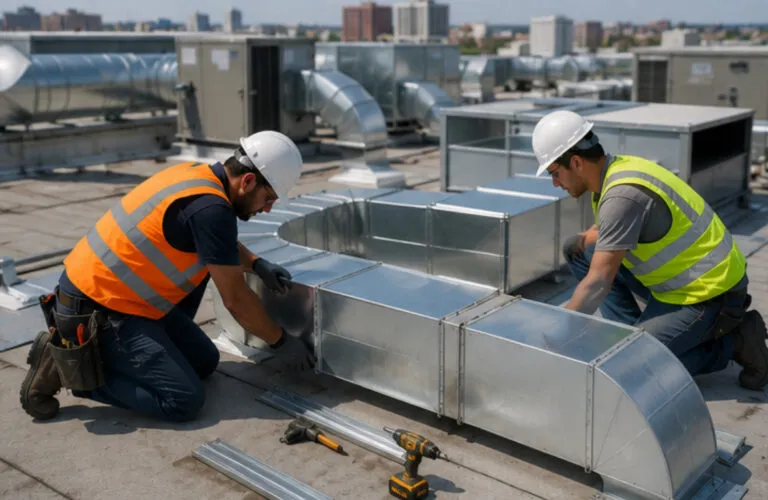
A full kitchen exhaust scope of work runs from the hood over the cooking line to the fan on the roof. Along the way, it takes in the grease duct, the fire suppression, the make-up air, and the wiring and permits that tie them together. No single trade quotes all of it. A sheet metal quote covers the hood and the duct. Fire protection, electrical, mechanical, and engineering each quote their own part. Walk through it piece by piece here, and catch any gap before it holds up the inspection.

A 60-Second Check for Gaps Between Quotes

Lay every quote you have beside this table. Any part without a name next to it is a gap, and gaps have a habit of showing up at inspection.

Part of the systemWho quotes itCheck before you sign
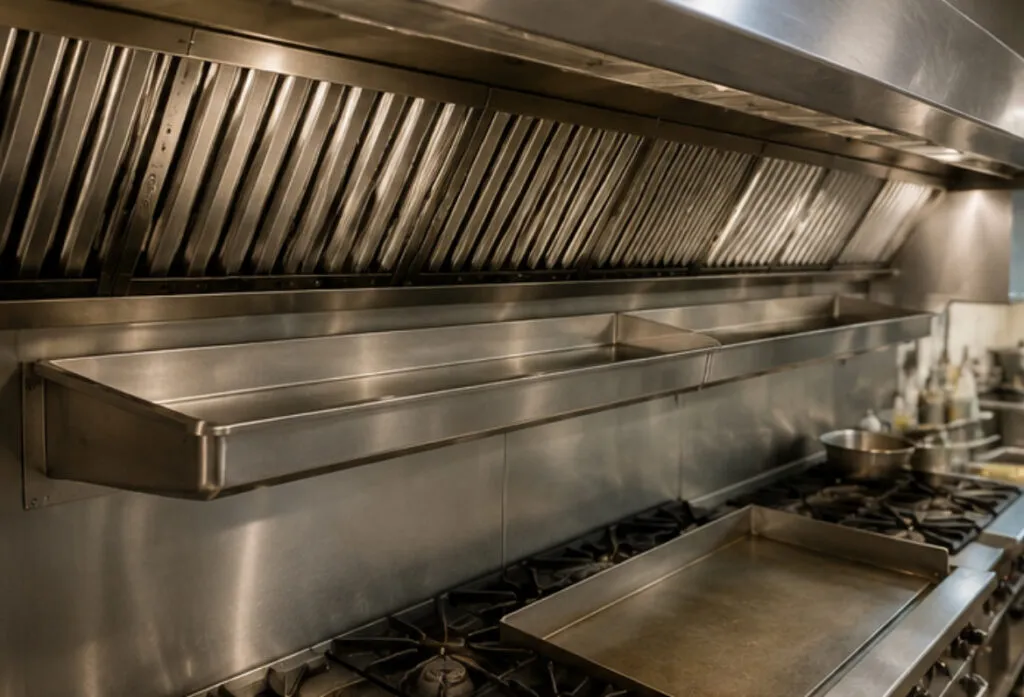
The hood over the cooking lineThe sheet metal contractorWhether the price covers the install or the hood alone
Grease duct from the hood to the roofThe sheet metal contractorWelded seams, access panels where the drawings show them, and where the run stops
The fire-rated enclosure around the ductThe general contractorThat the enclosure matches the fire rating on the drawings
The roof opening and its sealThe roofer, through the general contractorWho cuts the opening, and who seals it
The exhaust fan and the curb under itThe mechanical contractor or the equipment supplierWho supplies the curb, and who sets the fan on it
The make-up air unit and its ductThe mechanical contractor for the unit, and the sheet metal or mechanical contractor for the ductThat the air is heated in winter, and that the unit starts with the exhaust
Fire suppression inside the hoodA fire protection contractorThat the system is listed to ULC 300, the Canadian standard for restaurant fire suppression that replaced ULC/ORD-C1254.6
Wiring, interlocks, and the gas shutoffAn electrician and a gas fitter, each with a permit from Technical Safety BCThat the quote includes the interlocks for the fan, the make-up air, and the gas shutoff
Engineering and the permit drawingsA professional engineer registered in British ColumbiaThat the engineer's signed letters and site visits are in the fee
Cleaning after openingThe owner, through an exhaust cleaning companyThat the first cleaning is booked before grease builds up

One kitchen exhaust, several quotes

Each colour is a different trade. Any part none of your quotes covers is a gap.

exhaust fan on its curbroof opening
and its seal
roofgrease duct inside
a fire-rated enclosure
ceilinghoodpull stationcooking line
make-up air unitinterlock wiringfresh air back
into the kitchen

Who quotes what

  • Sheet metalhood and grease duct
  • Sheet metal or mechanicalfresh-air duct
  • Fire protectionsuppression and pull station
  • Mechanical or equipment supplierfan, curb, make-up air unit
  • Electricianinterlock wiring
  • General contractorfire-rated enclosure
  • Rooferroof opening and seal
  • Engineerdesigns it all and signs the drawings

Does Your Kitchen Need a Grease Hood and Fire System?

Whether your kitchen needs a grease hood and fire system depends on what gets cooked under the hood. Cooking that throws off grease or smoke needs the full system, and steam or heat needs much less.

Grease and smoke (Type 1)

Fryers, grills, griddles, ranges, woks, and ovens that roast meat all count. They need a grease hood, welded grease duct, and automatic fire suppression. All three follow NFPA 96, the fire-safety standard that BC's building code points to for commercial kitchens.

Steam and heat only (Type 2)

Steamers, bake ovens, coffee makers, and pizza ovens used only for pizza and bread fall here. They need a steam hood on regular ductwork. The city may also ask for a signed promise that nothing greasy gets cooked under it.

Ventless equipment

Some fryers and ovens are listed to vent straight into the room, with their own grease filters and fire suppression. Installed the way the listing says, they may need no hood or duct at all.

Plan the hood for the cooking you expect to do. Once a fryer joins the line, a steam hood no longer meets the rules, and the kitchen needs a Type 1. The full comparison is in Type 1 vs Type 2 Kitchen Hoods. Moving equipment under an existing hood can affect the fire system too. Kitchen Exhaust in a Renovation covers what to check first.

What the Building Permit Asks For in British Columbia

A kitchen that cooks with grease needs a building permit, and the drawings behind it come from a professional engineer registered in BC.

Permit drawings in British Columbia usually have to show each of these. Every trade then prices from the same set.

0 of 9 ready

The Order Trades Work In on a Restaurant Fit-Out

Each trade needs the one before it to finish first. The order shifts a little from job to job, but this is the usual run.

  1. Drawings and approvals. The engineer designs and seals the system, the health authority approves the layout, and the building permit is issued.

  2. Hood and grease duct. The hood goes up over the cooking line, and the grease duct is welded from the hood to the roof.

  3. Roof, fan, and fresh air. The roof opening is cut and sealed. The fan goes on its curb, and the make-up air unit goes in.

  4. Leak test, then the enclosure. The grease duct is tested for leaks while it's still open to view. Only then does the fire-rated enclosure close around it.

  5. Fire system and wiring. Suppression is piped into the hood. The electrician then wires the fan, the make-up air, and the gas shutoff to work together.

  6. Trip test and final inspection. A dry trip test sets off the fire system without spraying anything. It proves the gas and power to the cooking line shut off. Then the engineer signs off on site, and the building inspector does the final.

The rules for grease duct gauge, welds, and leak testing are in Grease Duct Specifications Explained.

Where Two Quotes Can Leave a Part Uncovered

In duck, duck, goose, nobody knows who's the goose until the tap on the head. On a kitchen job, that tap comes on inspection day, when a part no quote covered turns out to be yours to sort out. These six parts are where it happens most. Settle who covers each one while the quotes are still open, and nobody gets picked.

The fire-rated enclosure

The sheet metal quote stops at the duct, and the drywall quote stops at the ceiling. Put the enclosure on the general contractor's scope, with the rating from the drawings.

The curb under the fan

The fan comes on one quote and the roof opening on another. Ask which one includes the curb the fan sits on, and write the answer down.

The wiring that links the fan, fresh air, and gas shutoff

An electrician may price power to the fan but not the link to the make-up air and the gas shutoff. Send them the engineer's control sequence before they quote.

The fresh-air duct

The mechanical contractor prices the make-up air unit, and the sheet metal quote covers the grease duct. Name who runs the duct between the unit and the kitchen.

The two tests

Every trade assumes the leak test and the trip test belong to someone else. Ask which quote includes each one, and who books the engineer's visit.

The first cleaning

No fit-out quote covers cleaning, because it starts after opening. Book an exhaust cleaning company before the doors open.

Writing a Kitchen Exhaust Scope of Work That Leaves No Gaps

A vague line on a quote is where a part goes missing. Each example shows what the line leaves out and what to ask for in its place.

What the quote saysWhat it leaves outWhat to ask for instead
"Kitchen exhaust package"Which parts the package includesA list of every part, with "by others" next to anything left out
"Grease duct per drawings"Which drawing set, and where the run ends"Grease duct from the hood to the fan curb, per the mechanical drawings, revision 2"
"Install included"What gets installed, and what doesn't"Hood and grease duct installed, roof opening and seal by the roofer"
"Fire suppression by others"Who the others areThe fire protection contractor's name, with their quote attached
"Permit by owner"Who draws and signs for it"Sealed drawings and letters of assurance by the owner's engineer"
"Make-up air by mechanical"The duct between the unit and the kitchen"Make-up air unit by mechanical, supply duct by sheet metal"

How Duct Duct Goose Handles a Hood and Grease Duct Job

Our part of a kitchen job is the metal above the cooking line, from the hood to the roof. Most jobs run through these five steps.

  1. Reading the drawings. We check the equipment list, the hood spec sheet, and the duct route against each other. Suppression and engineering questions go back to the trade that owns them.

  2. Measuring on site, when it helps. Field measuring is available, and it sits on its own line of the quote.

  3. Quoting with the exclusions written out. The quote lists the hood, the grease duct, access panels, transitions, and equipment connections. Fire suppression, engineering, roofing, and the roof fan are named as work by others.

  4. Welding the grease duct. Each run is welded in mild steel or stainless in Pitt Meadows. Every run follows SMACNA and the NFPA 96 requirements on your drawings. Grease duct is typically ready in 1 to 2 days once the deposit and approved drawings are in, depending on the size of the order.

  5. Installing the hood and duct. Hoods come from a hood maker. Our installers hang each one and run the grease duct up to the roof.

If something doesn't fit and the mistake was ours, we fix or remake it at no charge. Our commercial kitchen exhaust work brings both together, with more on kitchen hood supply and installation and welded grease ductwork.

Kitchen Jobs We Fit Well, and Ones for Another Trade

Our side of the job is the hood and the grease duct. If that's the part you need, we're a good fit. The rest of the system belongs with other trades.

A good fit

  • A general contractor fitting out an empty restaurant unit
  • A mechanical contractor subcontracting the hood and grease duct
  • A restaurant adding burners or a fryer to its line
  • A brewery or café adding its first cooking line
  • A kitchen replacing a worn hood or a rusted grease duct

Better with another trade

  • The fire suppression system itself
  • Sealed engineering drawings or the permit application
  • The roof fan, the roof opening, or roofing
  • Exhaust cleaning once the kitchen is open
  • A home range hood or a dryer vent

If your cooking line can run on equipment listed to vent into the room, ask your designer before paying for a hood and duct. We'll point it out when we see it, even if it means we don't get the order.

What to Send Before We Price the Hood and Duct

Each item here saves a phone call before the quote. What Duct Duct Goose Needs to Quote Custom Metalwork has the list for any custom job. The other kitchen guides sit in Kitchen Exhaust and Food-Service Fabrication.

0 of 14 ready

Send the Kitchen Drawings You Have So Far

A full set of sealed drawings and a sketch of the cooking line with the hood marked are both a fine place to start. We'll quote our part, name what belongs to other trades, and tell you what's missing.

Standard ductwork and fittings price instantly on WebDuct, the online pricing and ordering portal, with a company account. That includes the supply ductwork on a kitchen job. Hoods, grease duct, installs, and other custom work start with a request or a call.

Sign UpCreate your Duct Duct Goose portal account

Loading the sign-up form…

⚠️Disclaimer!

At Duct Duct Goose, we specialize in sheet metal fabrication and stainless steel services for commercial and industrial applications, including HVAC systems, ducts, and custom metalwork. Please note that we do not offer services for automotive-related projects, such as vehicle parts, repairs, or modifications.