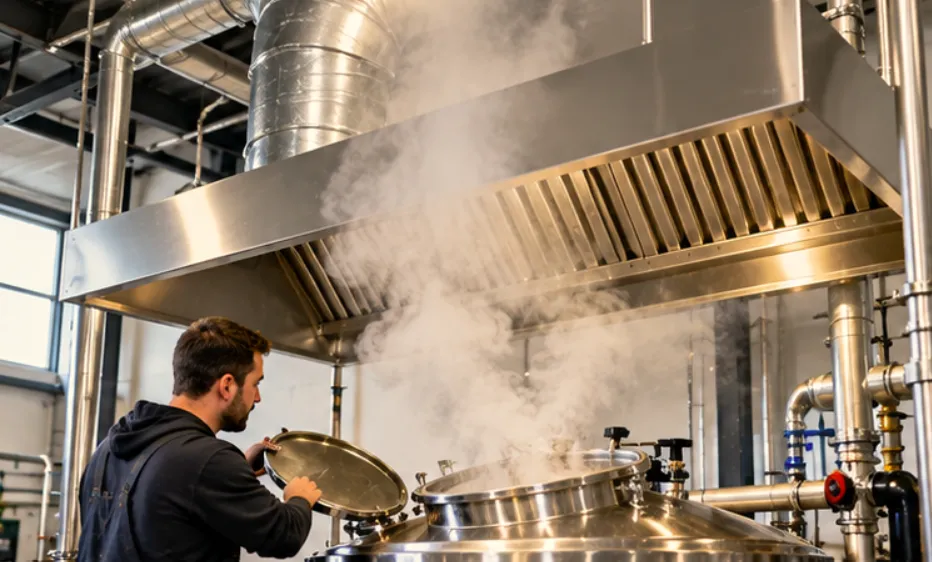

Grease or smoke from the cooking means a Type 1 kitchen hood, and heat or steam alone usually means a Type 2. Put one fryer under a shared canopy and the whole hood becomes Type 1.
A range, fryer, or griddle throws off grease and smoke as it cooks. A dishwasher or steamer mostly releases heat and water vapour. Combi ovens sit in between, because what comes out of them depends on the menu.
Putting every appliance under the same kind of hood either costs more than the job needs or leaves the kitchen with the wrong exhaust. Settling the hood type before anything is ordered keeps the equipment layout, the hood, and the grease duct lined up for the install.
What Is the Difference Between Type 1 and Type 2 Kitchen Hoods?
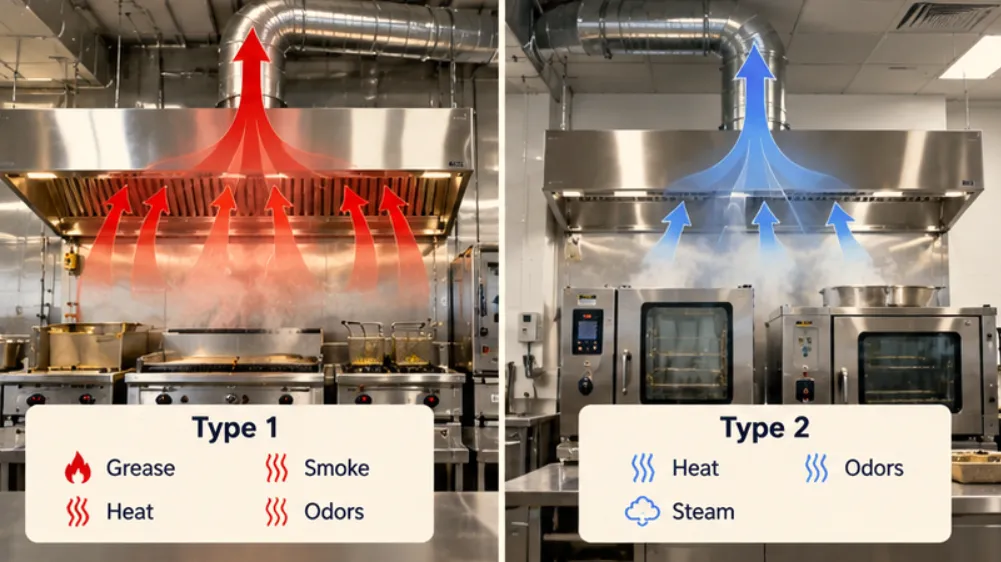
A Type 1 hood is a grease hood, built to NFPA 96 for appliances that put grease or smoke into the air. A Type 2 hood handles heat, steam, and odours from appliances that cook without grease.
| Feature | Type 1 kitchen hood | Type 2 kitchen hood |
|---|---|---|
| Primary purpose | Capture grease-laden vapours and smoke | Capture heat and moisture from non-grease equipment |
| Common applications | Fryers, griddles, ranges, broilers | Dishwashers, steamers, and other equipment that cooks without grease |
| Exhaust considerations | Welded grease duct, fire suppression, and NFPA 96 clearances | Moisture control and condensation, vented through standard exhaust duct |
| Cleaning considerations | Grease buildup, with filters and access panels for cleaning | Moisture, residue, and cleanable interior surfaces |
| Typical terminology | Grease hood | Condensate hood or vapour hood |
In British Columbia, the building code points commercial kitchen exhaust to NFPA 96. The BC Building Code Appeal Board has ruled that an NFPA 96 system is required unless grease-laden vapour isn’t being produced. That has to be shown to the satisfaction of the authority having jurisdiction (AHJ), usually the municipal building or fire official.
On a mixed line, one grease appliance decides the hood. A shared canopy over a fryer and a steamer is a Type 1 hood, because the grease rises into the same hood and duct. Settle the hood type before anything is ordered.
Which Commercial Kitchen Equipment Needs a Type 1 Hood?
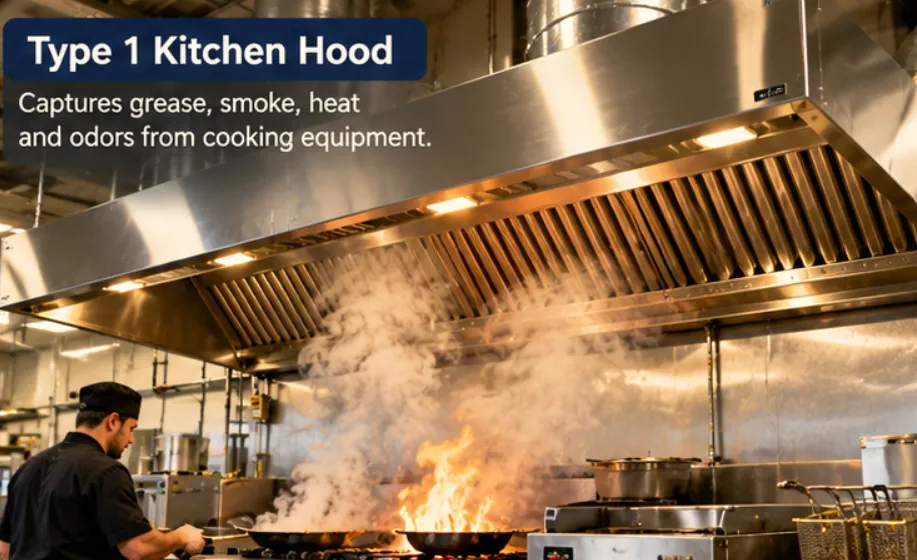
Type 1 hoods go over equipment that puts grease-laden vapour or smoke into the air as it cooks. How much comes off depends on the appliance, the temperature, and the food.
| Appliance | Why it usually needs a Type 1 hood |
|---|---|
| Deep fryers | Hot oil throws grease-laden vapour into the air with every basket |
| Griddles | Meat, eggs, and burgers release grease and smoke across the flat top |
| Ranges and charbroilers | Open flames and searing produce smoke, grease, and combustion fumes |
| Broilers | High heat turns fat into heavy smoke |
| Woks | High-heat stir-frying sends up oil and smoke fast |
A Type 1 hood is only as good as the duct behind it. The exhaust runs through sealed, welded grease ductwork up to the fan, with access panels for cleaning. The hood, duct, fan, and makeup air are designed as one system.
The appliance’s name doesn’t settle it, and neither does its grade. The appeal board has found that domestic-style equipment used for commercial cooking still counts, because the question is how it’s used. Your engineer and the AHJ make the final call on each appliance.
When Does a Kitchen Need a Type 2 or Condensate Hood?
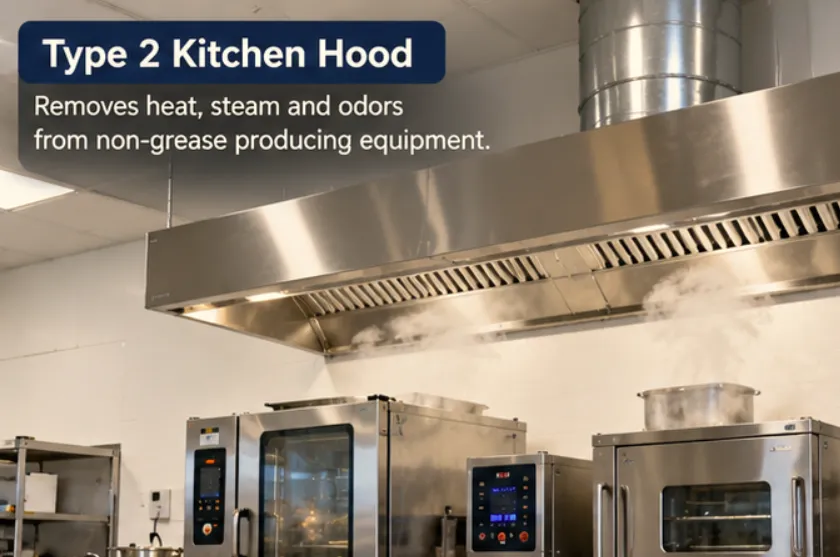
A Type 2 hood goes over equipment that gives off heat or moisture with no grease or smoke. It pulls the warm, wet air out before it turns into condensation on the ceiling and walls.
| Appliance | Why a Type 2 hood fits |
|---|---|
| Commercial dishwashers | Hot rinse and drying cycles fill the room with steam |
| Steamers | Steam builds humidity and condensation around the unit |
| Pasta cookers | Boiling water releases heat and moisture all service long |
| Steam tables and kettles | Many give off heat and vapour without grease |
| Other non-grease equipment | The spec sheet and your engineer decide the exhaust |
Kitchens often call a Type 2 hood a condensate hood because catching moisture is its main job. Not every steamy appliance needs one, though. Sometimes the room’s ventilation can carry the load, if your engineer designs it to.
Dishwashers are where this comes up most. Some models come with a built-in condensing or vent hood from the manufacturer, which changes what the room needs. Check the spec sheet before anyone draws a hood over it.
Does a Combi Oven Need a Type 1 or Type 2 Hood?
Combi ovens are harder to classify because they roast, steam, or do both at once. What comes out of one depends on the food and the cycle it runs.
A combi used mostly for steaming vegetables is a different exhaust job from one roasting chicken all day. A steam mode doesn’t make it a Type 2 appliance. The words “combi oven” don’t make it Type 1 either.
Before the hood type is set, check these five things with your project team.
- The manufacturer’s documentation, including its venting instructions and any emissions information
- The menu and the cooking modes the kitchen plans to run
- Whether that cooking puts grease or smoke into the air
- Any listed or built-in exhaust the manufacturer supplies with the unit
- The local requirements and exceptions your engineer and the AHJ will apply
The review matters most when the combi sits beside fryers or a griddle. Under a shared canopy, the grease appliances set the hood type, whatever the oven needs on its own. Your engineer settles the layout before the hood is ordered.
How Should You Plan the Hood and Grease Duct for a Mixed Equipment Line?
Once your engineer has set the hood type, planning turns to fit. The hood has to cover the line, and the duct has to reach the fan through whatever the building puts in its way.
Have these ready before the hood is ordered.
- An equipment schedule with each appliance’s make, model, size, and spot on the line
- The hood length, depth, mounting height, overhangs, and clearances from the approved drawings
- Duct connection points, matched to the planned route and the building’s structure
- The materials and construction details the drawings and code call for
- Access for cleaning the hood, filters, and duct
- Which appliances share a hood, and whether any of them changes its type
- Ceiling heights, supports, utilities, and the other trades working overhead
Our kitchen hood installers supply the stainless hood and install it with the grease duct, access panels, and connections. The grease duct itself is built on our floor in Pitt Meadows. Fire suppression and engineered drawings stay with other trades, and the quote says so.
Which Questions Decide Whether a Kitchen Needs a Type 1 or Type 2 Hood?
A hood bought for the wrong type is an expensive mistake to undo once it’s on the wall. These questions settle the type before the order goes in.
| Question | Why it decides the hood |
|---|---|
| Which appliances sit under each hood? | One grease appliance makes a shared hood Type 1 |
| What will each appliance cook? | The menu decides whether grease goes into the air, not the label |
| What does each spec sheet say about venting? | Some units come with their own exhaust or condensing hood |
| Is any domestic-style equipment being used commercially? | It still counts as commercial cooking |
| Has your engineer named the hood type on the drawings? | The approved drawings set the type, not the appliance name |
| Has the AHJ seen the plan? | The local building or fire official signs off on the system |
A Type 2 hood isn’t automatically fine because an appliance makes mostly steam. A Type 1 hood isn’t automatically the safe choice either, since a grease duct and suppression add cost the job may not need.
A hood is described as listed or fire-rated only when its manufacturer’s paperwork says so. Your engineer and the AHJ decide whether the finished system is acceptable.
Who Supplies the Hood, Builds the Grease Duct, and Installs Both?
The Duct Duct Goose crew does all three, so one company answers for the hood and the run above it. Our grease duct fabricators build the duct in Pitt Meadows, and the same crew mounts the hood and connects the run.
Once you’ve approved the drawings and paid the deposit, grease duct typically takes 1 to 2 days, depending on order size. The hood’s arrival date is set by its supplier, and both dates go on your quote.
Send the equipment schedule and approved drawings, and we’ll price the hood, the grease duct, and the install on one estimate. Tell us what’s cooking, and we’ll quote what goes above it.
Type 1 and Type 2 Kitchen Hood Questions
Does a Type 2 hood need grease duct?
No. Grease duct is welded and sealed for exhaust that carries grease-laden vapour, so it serves Type 1 hoods. A Type 2 hood vents through standard exhaust duct routed to your mechanical drawings.
Does every commercial dishwasher need a Type 2 hood?
Not every one. The spec sheet, the room’s ventilation design, and the AHJ’s approval decide whether a separate Type 2 hood goes in.
Is a condensate hood the same as a Type 2 hood?
In most kitchens, yes. “Condensate hood” is the everyday name for a Type 2 hood, because it catches the steam before it condenses. The drawings still name the type, so check them rather than the label.
Who decides whether a kitchen needs a Type 1 or Type 2 hood?
Your engineer or designer specifies the hood type, and the AHJ approves the system. Our crew supplies, builds, and installs to the approved drawings instead of choosing the type.
Does a Type 1 hood need fire suppression?
Yes. NFPA 96 calls for a fire suppression system on a Type 1 hood over grease-producing equipment. That system is installed by another trade, and it sits outside our scope.