
A part that wears out now and then
If it fails once in a while, have one made from the drawing when it's needed. A shelf of factory spares can sit for years. Repairing or remaking a worn part helps you choose between the two.
British Columbia

HOW ORDER SIZE CHANGES WHO SHOULD MAKE YOUR PARTS
For one part, a few, or a few hundred, a local shop often costs less once you count the factory's minimum order.
Small batch metal fabrication is the better buy when you need fewer parts than a factory's minimum order. It also wins when the design could still change, or the job can't wait for a shipment. A production run wins when the design won't change again and you need thousands a year. That kind of run is made on tooling, which costs a lot up front and little for each part after. This guide shows when that start-up cost pays off, what a factory minimum costs when you need fewer, and how to order a small batch.
If any of the first three answers is yes and the part isn't a stock size, local fabrication is usually the better buy. The last two rows show where another supplier may suit you.
| Ask yourself | If yes | If no |
|---|---|---|
| Do you need fewer parts than the factory's minimum order? | A local fabricator makes the number you need, and no more | A production run may cost less for each part |
| Could the design still change? | Changes cost little between small orders | Tooling becomes an option |
| Do you need the parts before an overseas shipment could arrive? | Local work skips the weeks at sea and in customs | A long shipment can fit the schedule |
| Is it a standard size? | A distributor's stock usually arrives sooner and costs less | It has to be made, so the quantity matters most |
| Will you need thousands a year of the same design? | A production run on a stamping die, here or overseas, will likely cost less | Cutting and bending stays the better way to make it |
A production run gets its low price for each part by spending more before the first part is made. That spending only pays off when it's spread over a lot of parts.
A die is designed, machined, and tested for one part shape, and once it's built it can't make anything else. If you need thousands a year of a design that won't change, its cost spreads thin across them. For a few dozen parts, it never pays back.
Every run starts with programming and setting up the machines. If one order is split into two, that setup is paid twice.
A factory sets the fewest parts it will make in one order, so its setup is worth the time. If you need fewer, you either pay for the extras or buy somewhere else.
If the design changes after the die is built, the die has to be reworked or built again. If the design might still change, keep making the part by cutting and bending until it's final.

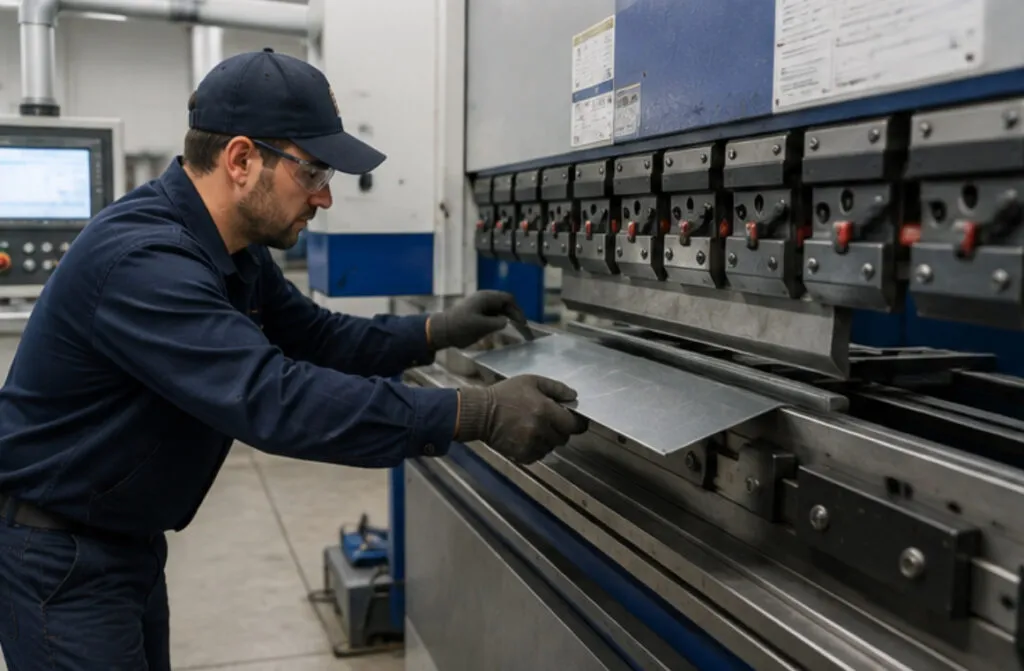
A local fabricator works from the drawing with cutting, bending, and welding, and no tooling made for your part. Setup still costs something. Why small custom metal parts cost more shows how the price for each part falls as the quantity grows.
Buying 500 to get a low price on the 60 you need leaves 440 on a shelf, and stock costs money to keep. That yearly cost is called carrying cost. It covers the cash tied up, the space, handling, damage, and parts that go out of date. BDC, the Business Development Bank of Canada, puts it at 20 to 30% of the stock's value each year.
The example uses 25%, the middle of that range, with prices assumed for the illustration. It's not a Duct Duct Goose quote.
| Illustration in CAD, not a Duct Duct Goose quote | Buying the factory minimum | Having 60 made locally |
|---|---|---|
| Parts bought | 500 | 60 |
| Price for each part, delivered | $8.00 | $30.00 |
| Paid up front | $4,000.00 | $1,800.00 |
| Extra parts left after this year's 60 | 440, worth $3,520.00 | None |
| Cost to keep the extras for one year, at 25% | $880.00 | None |
| Total for 60 usable parts if the design changes next year, not a Duct Duct Goose quote | $4,880.00 | $1,800.00 |
The factory part costs less each, and it wins if you'll use all 500 before the design changes. At 60 a year, the extras last more than seven years, and the cost of keeping them adds up the whole time. If the design changes after one year, those 60 parts cost more than twice the local batch. Set your own numbers beside these before you buy a minimum.
A product that will one day need a production run often starts as small orders made by cutting and bending. The design can change between orders, and the parts keep coming while the tooling is made.
Make the first parts locally. Order a few dozen parts, enough to try in the finished product before anyone pays for a die.
Change the drawing between orders. Each change goes on a new drawing revision, and only the next order is affected.
Order the tooling once the design stops changing. A die built for the final design won't need to be reworked or built again.
Keep ordering locally until the production parts arrive. From Shanghai, the sea crossing alone takes two to three weeks. Customs and trucking come on top of that.
Parts made locally while the design settles and the tooling is built
The parts keep coming, and each drawing change only touches the next order
Made locally
Cut, bent, and welded from the drawing
Production run
Ordered once the design stops changing
Order 1
Rev A
Change
new revision
Order 2
Rev B
Order 3
Rev B, design settled
Order 4
Rev B
Tooling
built for Rev B
Sample
checked
Shipment
weeks at sea
Production parts arrive
Sheet metal prototype to production covers how to sign off on the first part, so every later order matches it.
Spare parts are the smallest order of all, and where a factory minimum fits worst. You don't need the minimum. Have a spare made when the old one fails, or from the old part once its maker stops selling it. For a fleet or a product line, add a few to each regular order.
If it fails once in a while, have one made from the drawing when it's needed. A shelf of factory spares can sit for years. Repairing or remaking a worn part helps you choose between the two.
Send the old part or its drawing, and a working replacement can often be made from either. It won't be an exact copy of a proprietary part, but it can do the same job.
Order a few extra each time, so the spares match the current drawing. Revision control on repeat parts keeps old and new versions apart.
Few parts, or a design that's still changing, point to a local shop. Thousands a year of a part that never changes point to a production run. These three orders are illustrations, not Duct Duct Goose jobs.
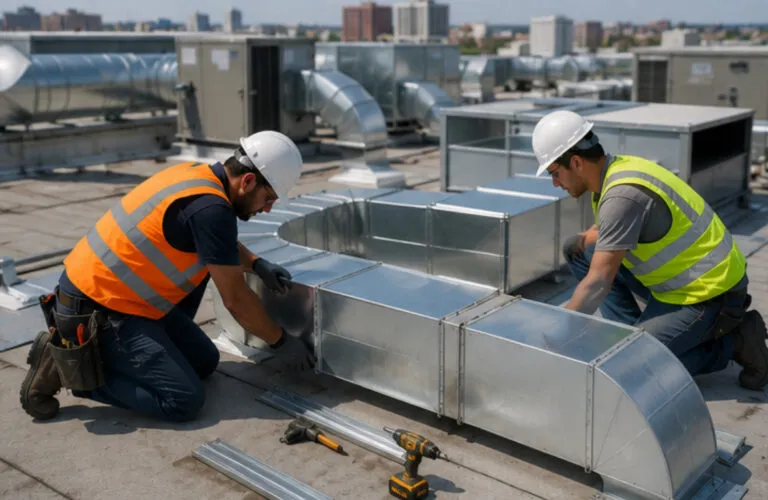
A building is replacing six rooftop units. The new units don't line up with the old curbs, the raised frames they sit on, so each one needs an adapter sized to both. No factory stocks a part sized to one building, and the crane is booked this month, so a local shop makes all six.
An equipment maker bolts a sheet metal guard over the moving parts of each machine it builds, about 150 a year. The guard hasn't changed in two years, but 150 a year is too few to pay back a die. Reordering from the same drawing at a local shop suits it.
A manufacturer uses thousands of one small bent clip each year, and the clip hasn't changed in years. At that volume a die pays for itself, so a production run, here or overseas, will likely make each clip for less.
The way a small order is placed changes its price as much as the part does. The ordering is also the easiest thing to change.
| What raises the cost | What it costs you | Do this instead |
|---|---|---|
| Ordering a part you use steadily one at a time | The setup is paid again on every order | Order the year's likely need in one or two orders |
| Leaving out how many you'll need a year | The part is priced as a one-off | Give the yearly number, even a rough one |
| Buying a factory minimum to get the low price | Cash and space tied up in parts you may never use | Work out the carrying cost before you buy |
| Changing the drawing without a new revision | Old and new versions get mixed up on the shelf | Give every change its own revision letter |
One part, a few dozen, or a few hundred all start from your drawing and the number you need. The steps are the same at every size.
Send the drawing and the quantity. A sketch or photo with sizes works too. If we draw it from your sketch, there's a fee, credited when you place the order.
We tell you if a stock part or a production run is the better buy. Then you decide where to order.
We make the first parts, and you check them. Ask for a sample first if the part needs signing off.
We keep the drawing for the next order. A reorder comes off the same drawing and revision.
Your quote comes with a ready date for the order, and you can plan the install around it. Our custom metal supports and enclosures page covers brackets, guards, and stands. Sheet metal cutting and bending shows the machines we form them on.
A local fabricator suits parts that are made to a drawing in modest numbers. Very high volumes and standard sizes belong elsewhere.

If a distributor's shelf or a production run would cost you less, we'll say so before you order, even though the work goes elsewhere.
With these in the request, the price you get back is for the quantity you need. When imported sheet metal parts make sense covers the other side of the choice.
If you're comparing against an overseas quote, landed cost and the hidden costs of imported metal parts add up to the full price first. More on this choice sits in Local Fabrication vs Imported Parts.
Send a drawing, a sketch, or a photo with the quantity you need this year. We'll tell you whether it's an order for us, a stock part, or a job for a factory.
Standard ductwork and fittings price instantly on WebDuct, the online pricing and ordering portal, with a company account. Stainless, grease duct, installs, and other custom work start with a request or a call.
